
Consultation

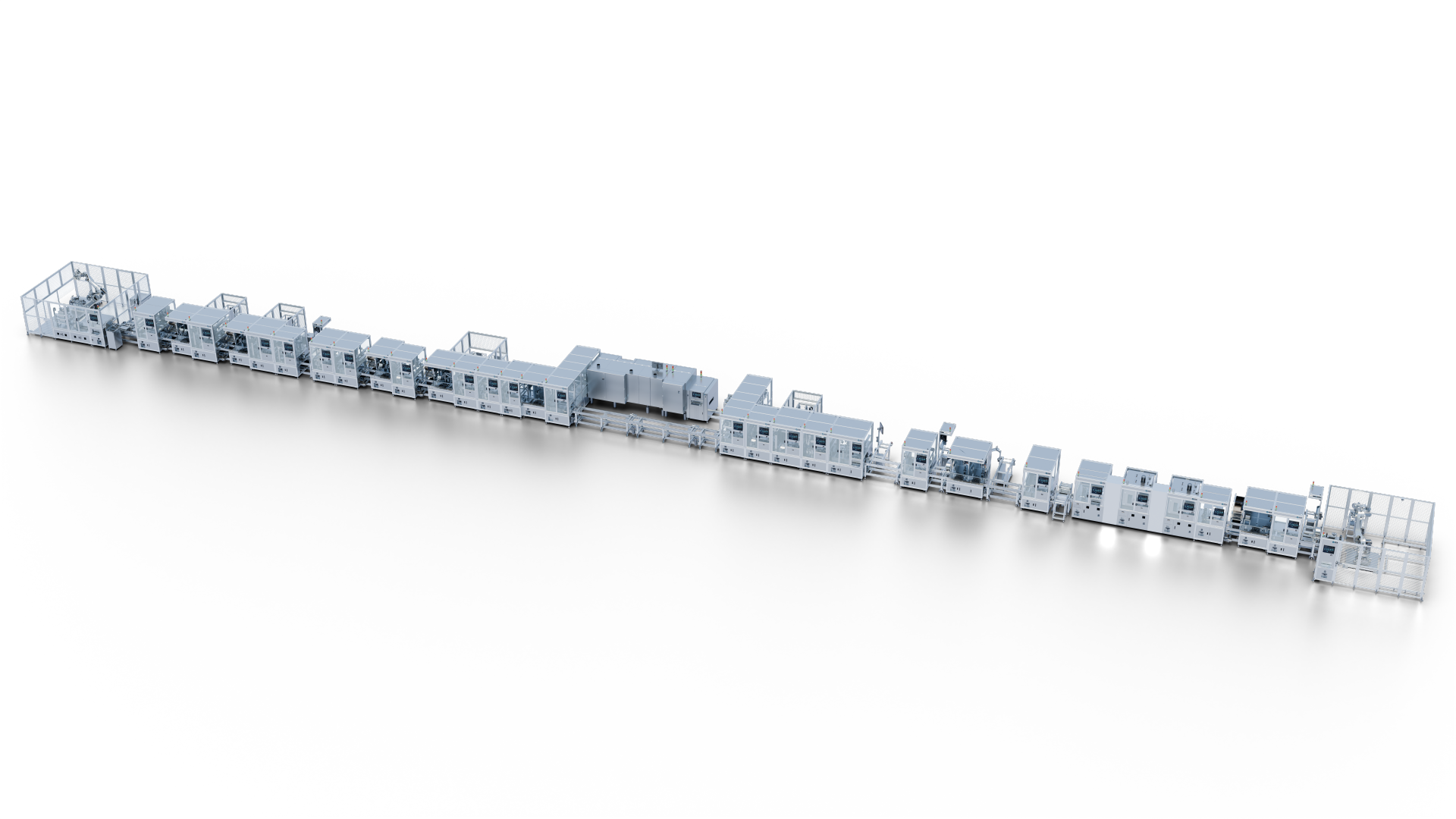
Power Supply and Electronic Control Automated Production Line

End‑to‑end process integration and data connectivity; Highly flexible modular design and rapid changeover capability; Closed‑loop quality system with data‑driven continuous optimization.
Process Integration
Full‑Process Digitization
Modularization
Unitization

Product Introduction

The Power Supply and Electronic Control Automated Production Line is a flexible, modular, and digital integrated manufacturing system that integrates multiple processes and covers the entire workflow from raw materials (PCBA, structural parts) to finished products. It is specifically designed for producing various power supply and electronic control products (e.g., power adapters, server power supplies, on‑board chargers/OBC, industrial inverters, converters, charging pile modules, etc.). Through deep integration of automated equipment and information systems, it achieves unmanned or highly automated continuous production of core processes such as "PCBA assembly → burn‑in testing → conformal coating/potting → final assembly → final inspection and packaging."

This production line is not a single piece of equipment but a systematic engineering solution. By unifying the production takt time and utilizing information‑based scheduling, it connects traditionally scattered "production islands" into a value flow line. Its core positioning is to serve as the ultimate physical carrier for high‑quality, high‑efficiency, and high‑flexibility manufacturing in the power supply and electronic control industry, as well as the central backbone of a digital factory.



Product Features

  • Seamless process integration
    eamlessly integrating processes originally scattered across multiple workshops (post‑SMT, assembly, testing, packaging)
  • High‑speed motion
    Each axis moves quickly with excellent acceleration, significantly improving production efficiency.
  • End‑to‑end digitalization
    Full‑process data for each product (process parameters, test results, material batch, equipment status) is automatically captured and permanently linked to the product’s unique serial number (SN).
  • Modular design
    The line adopts modular and unitized design; each functional module (e.g., screw driving station, test station) can be flexibly combined and reconfigured like Lego blocks according to the product’s process route.
  • Smart sensing
    Supports vision guidance and force‑control sensing for intelligent operation and assembly.
  • Smart connectivity
    Supports industrial Ethernet and multiple communication protocols for easy integration into smart factory systems

Function Introduction

Function Items

High‑precision automatic feeding and assembly
Core process automation
Online electrical performance testing
Industrial Data Acquisition and Manufacturing Execution System
Digital Twin

Function Description

Through vibratory bowl feeders, feeders, and multi‑axis robots, automatic feeding, forming, and insertion of components such as resistors, capacitors, and ICs are achieved. For power devices like MOSFETs, high consistency in clip/spring clamp assembly is ensured.
Integrates automatic screw driving, dispensing, coating, and other units to ensure precise execution of process parameters.
During or after the assembly process, various electrical characteristic tests are automatically performed, including hipot (dielectric withstand) testing, loop resistance measurement, transfer/trip time monitoring, and comprehensive characteristic tests simulating abnormal conditions such as phase loss, undervoltage, and overvoltage, ensuring proper product functionality.
Guanjia’s self-developed IMES system collects production process data (process parameters, test results, material information, etc.) in real time. The system links this data to each product’s unique serial number, establishing a complete traceability record from components to finished goods.
Before the physical construction of the production line, a virtual line is built in the digital world for process simulation and operational debugging, significantly shortening the on‑site installation and commissioning cycle.


Application Scenarios