

EN


Project Background
Multiple projects have been implemented at benchmark enterprises in the domestic automotive industry. In response to the rapid growth of new energy vehicle production capacity and the increasing demand for product consistency, the client plans to build a fully automatic OBC burn‑in test line. The system, through an RGV‑based automated handling and warehouse storage configuration, achieves automated burn‑in and testing, optimises efficiency, stabilises quality, reduces energy consumption, and enables data‑driven traceability management.
The current manufacturing processes are primarily confronted with the following challenges:
✅ Low manual testing efficiency, making it difficult to meet capacity expansion needs.
✅ Lack of standardised operating procedures, resulting in insufficient product consistency.
✅ High energy consumption during the burn‑in process, leading to elevated operational costs.
✅ Absence of real‑time monitoring and data traceability mechanisms.
To address these issues, the client has decided to introduce a fully automatic burn‑in test line solution to enhance production efficiency and product reliability, while improving energy recovery efficiency.
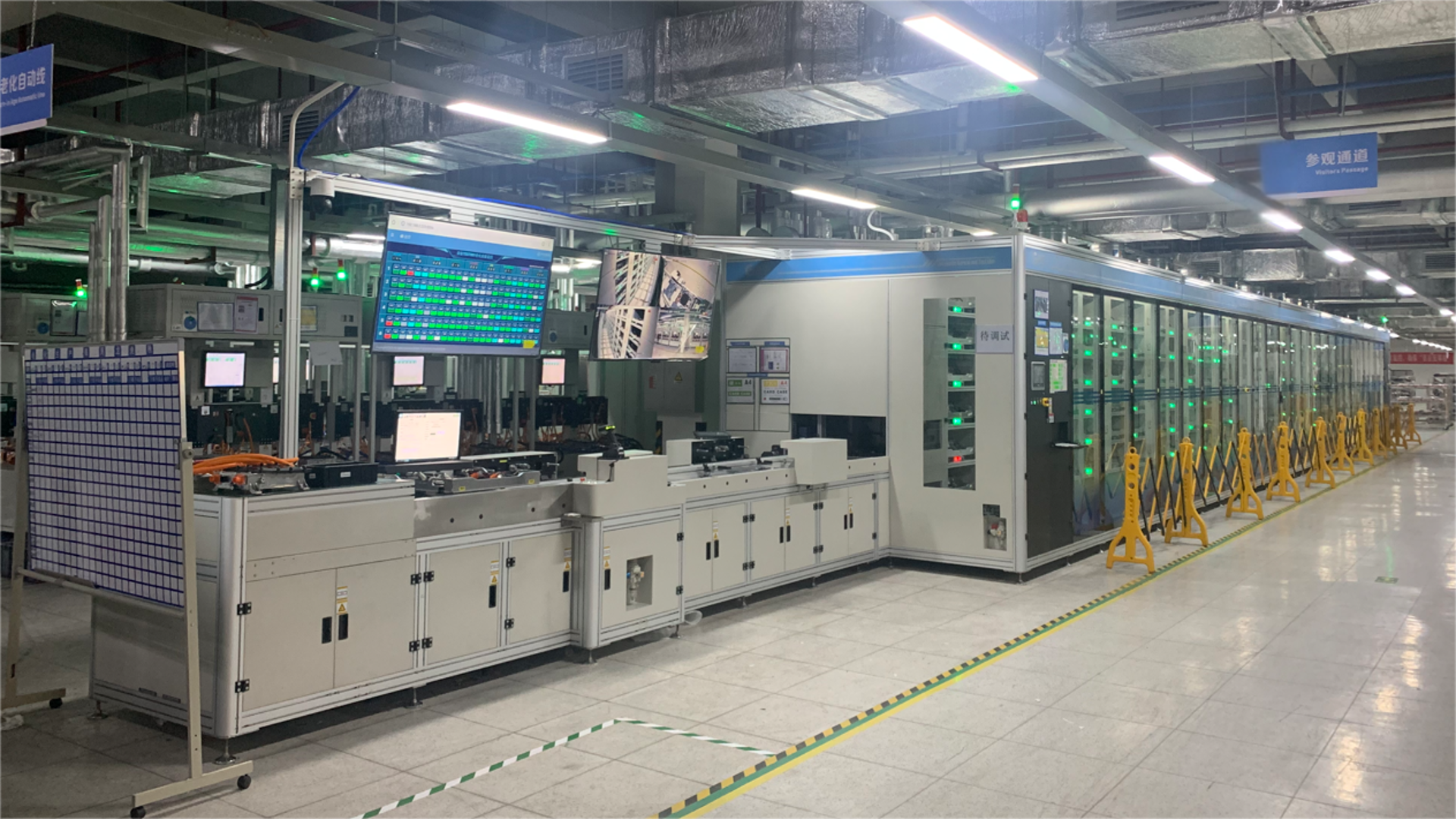
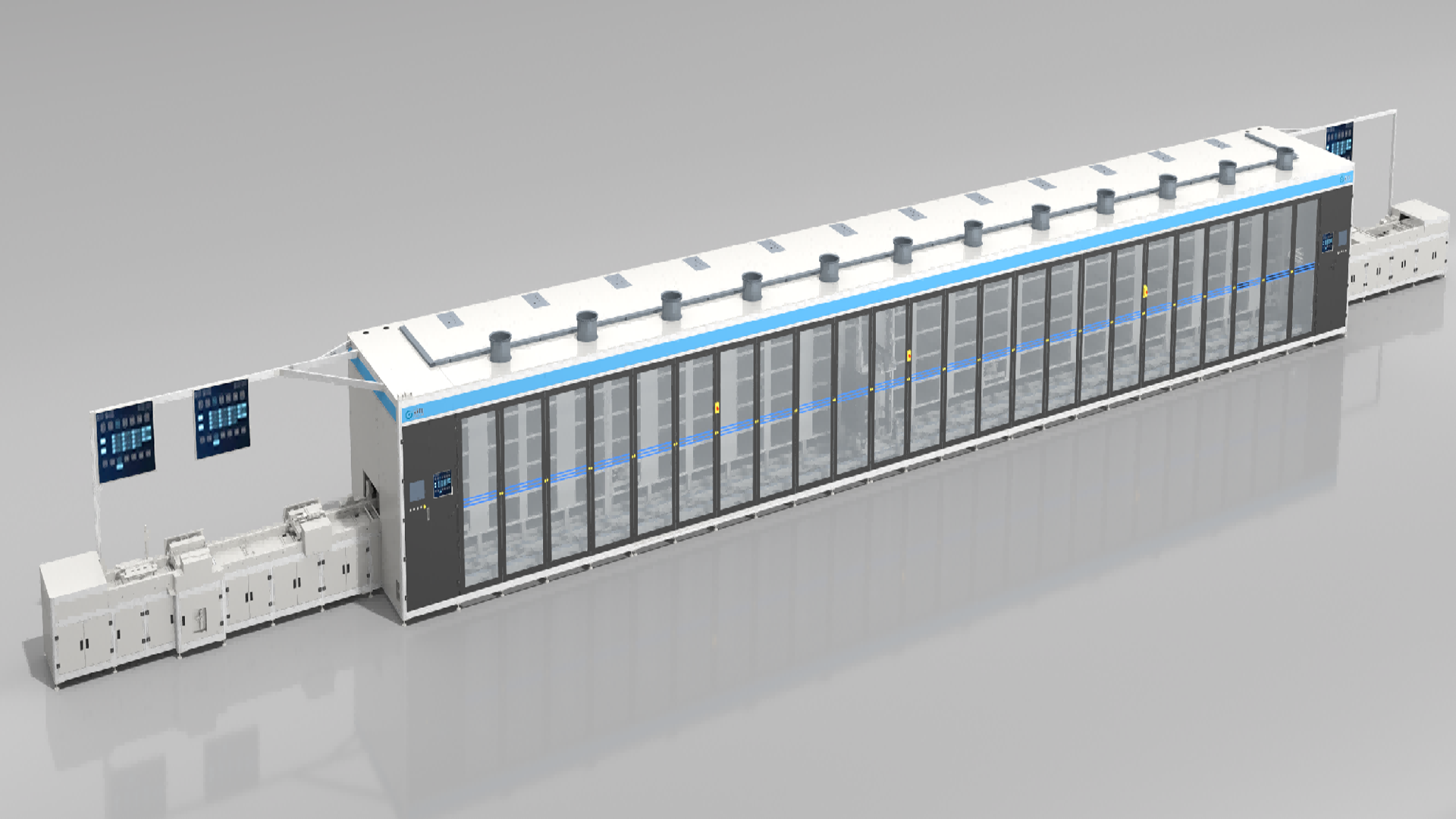
First、Equipment Overview and Core Capabilities
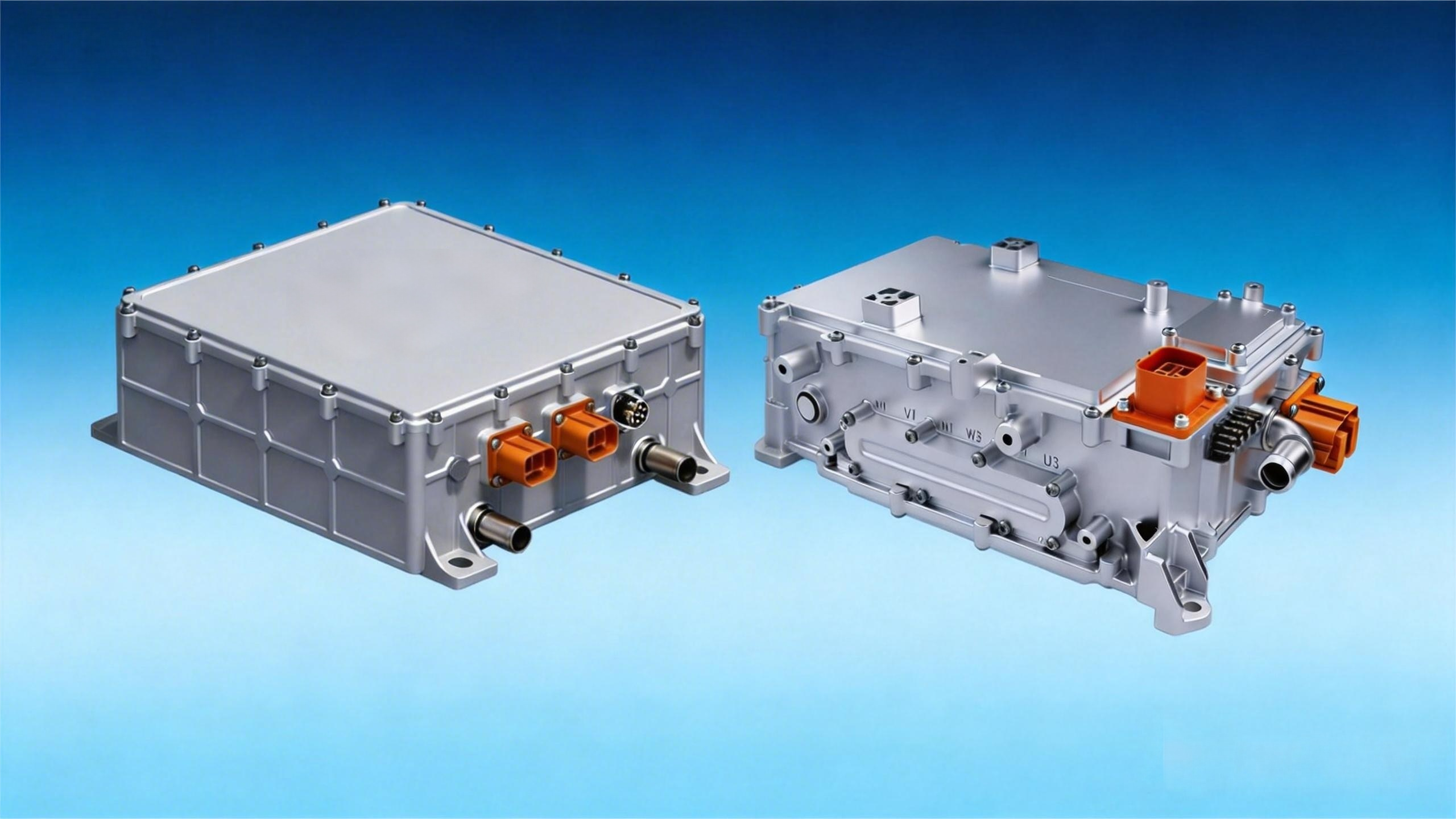
1.Equipment Name / Purpose:Burn‑in test line for single‑phase / three‑phase 7–11kW NEV on‑board charger (OBC) products.
2.Core Objectives:To achieve automated testing and automated burn‑in of products, enabling fully automated burn‑in operations.
3.Operating Mode:Utilises a combination of RGV (Rail‑Guided Vehicle) shuttles and a warehouse storage configuration for burn‑in storage positioning, maximising product throughput within the available footprin4.Logistics System:RGV shuttles are responsible for automated scheduling and transfer of burn‑in carriers. The complete automation system is supplied by Guanjia.
Second、Burn‑In Room Specifications and Parameters
1.Dimensions:28m (L) × 4m (W) × 2.8m (H).
2.Capacity Configuration:Accommodates up to 144 products for simultaneous burn‑in testing, with RGV achieving a throughput of 40 units per hour.
3.Environmental Control:emperature range: 45°C ± 4°C (adjustable). Heating function only; products are cooled via the built‑in water‑cooling system throughout the burn‑in process.
4.Additional Features:Post‑cooling residual water removal function; control logic automatically switches based on product model.
This equipment is applicable to on‑board charger manufacturing enterprises, enabling early failure screening, high‑current cyclic surge testing, unmanned continuous operation, and production capacity enhancement.
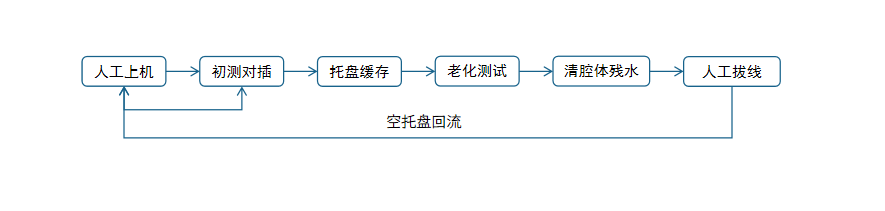
This equipment is applicable to on‑board charger manufacturing enterprises, enabling early failure screening, high‑current cyclic surge testing, unmanned continuous operation, and production capacity enhancement.
Applicable Manufacturers Include:
On‑Board Power Supply Manufacturers: Producing 7kW/11kW NEV on‑board chargers.
NEV Power Supply Equipment Manufacturers:Producing on‑board chargers, DC/DC converters, and related power conversion products.
OBC Contract Manufacturers (EMS Factories):Undertaking OBC production for multiple brands and platforms.
NEV Component Suppliers;Supplying high‑voltage connectors, charging sockets, and other key peripheral components
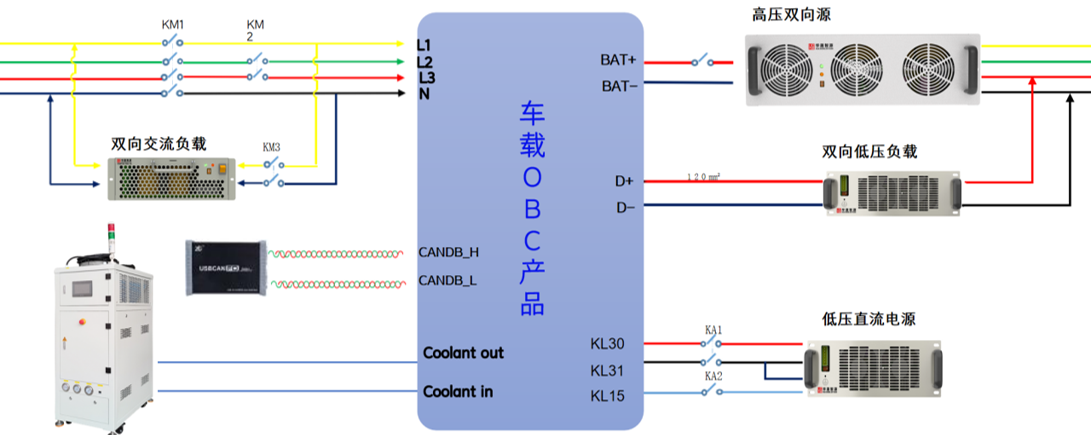



 Consultation
