

EN


Project Overview
Multiple projects have been implemented at major MCU contract manufacturing enterprises. With the rapid growth of the new energy vehicle industry, the integration and reliability requirements for vehicle electronic control systems are steadily increasing. As a core control component, the performance stability and reliability of the MCU directly impact vehicle quality. Traditional manual burn‑in testing methods are no longer able to meet the demands of large‑scale production in terms of efficiency, standardisation, and data traceability.
The current manufacturing processes are primarily confronted with the following challenges:
√ Low manual operation efficiency, making it difficult to meet capacity expansion requirements.
√ Inconsistent operating procedures, resulting in insufficient product consistency.
√ High energy consumption and labour costs, with operational efficiency yet to be improved.
√ Lack of data collection and process traceability, preventing refined quality management.
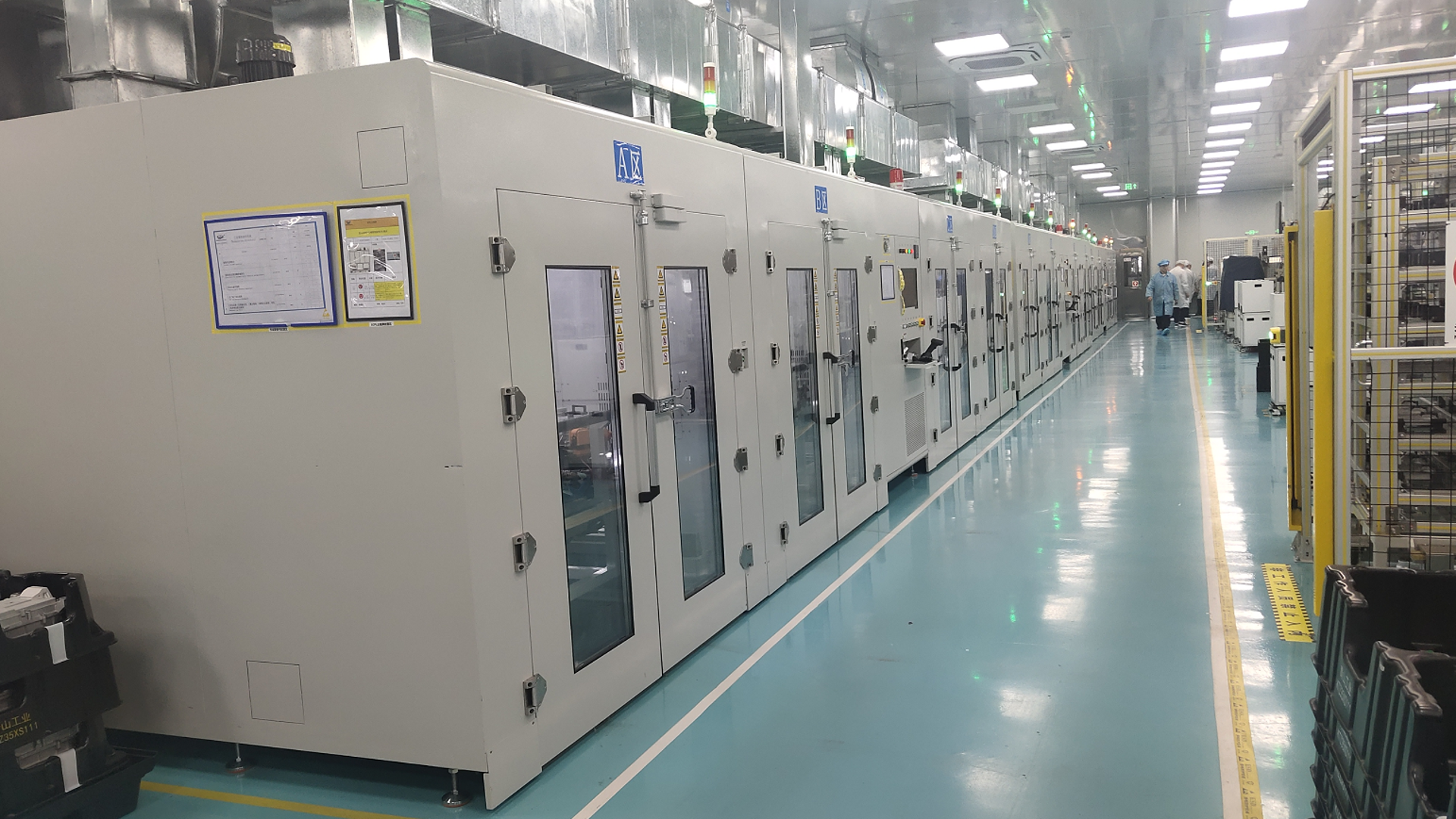
To address the above issues, the client plans to build an automated MCU burn‑in test line. The system employs a transfer cart combined with a walk‑in burn‑in room configuration to achieve automated burn‑in and unmanned loading/unloading. The system can be progressively upgraded to an AGV‑based automated logistics system as capacity expands, thereby significantly improving production efficiency and product reliability, and supporting the client's transformation toward smart manufacturing.
First、Equipment Overview and Core Capabilities
1.Equipment Name / Purpose:Automated burn‑in test line for NEV MCU controllers.
2.Core Objectives:To achieve automated burn‑in of products, enabling unmanned loading/unloading operations for burn‑in.
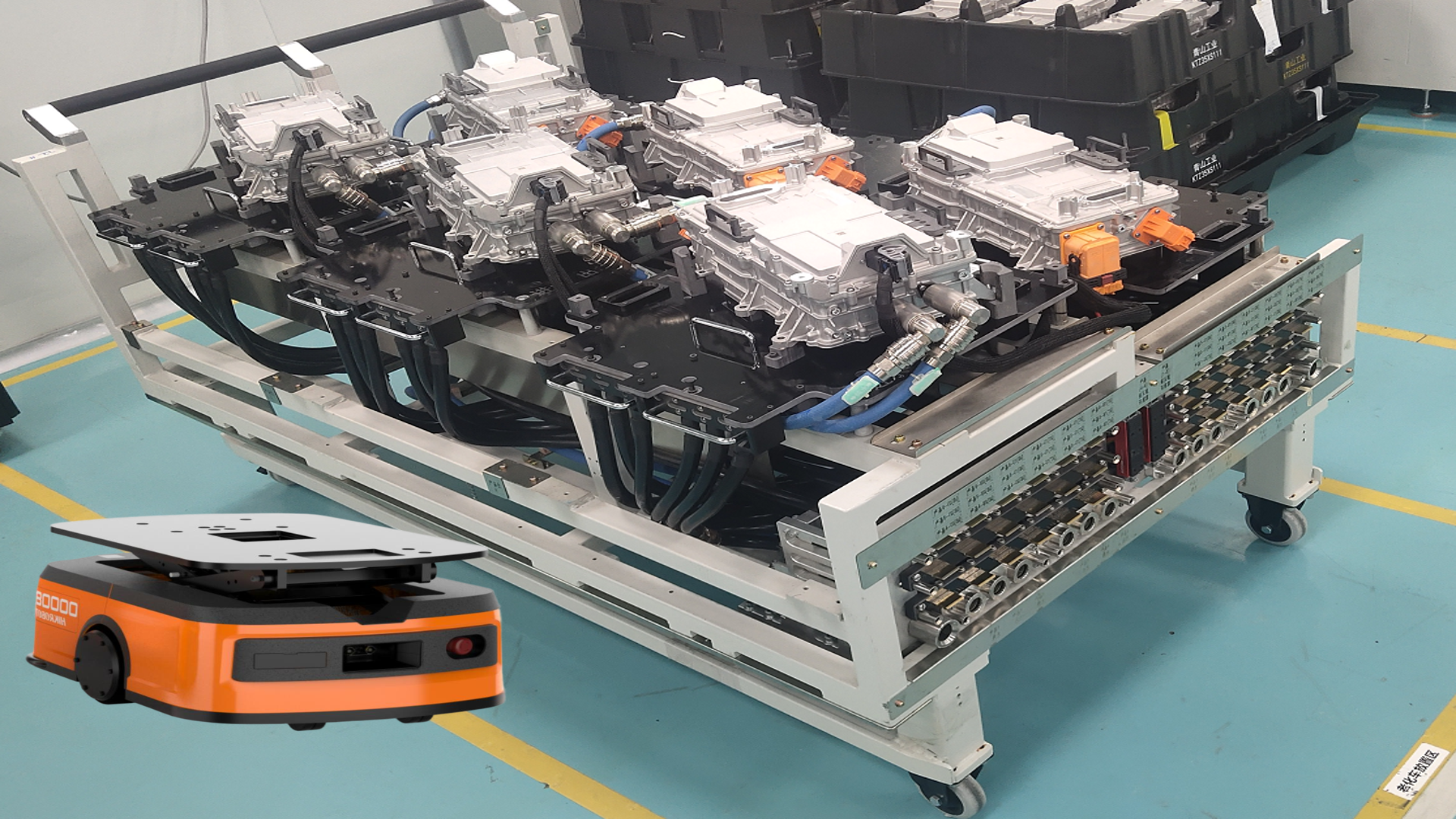
3.Operating Mode:Utilises a transfer cart combined with a walk‑in burn‑in room configuration to eliminate manual handling of burn‑in carriers. Burn‑in carriers can be transferred via AGV or manual means.
4.Logistics System:Burn‑in carriers are dispatched and transferred manually or via AGV tugs. The system can be upgraded from manual to fully automatic operation depending on production capacity and line conditions.
Second、Burn‑In Room Specifications and Parameters
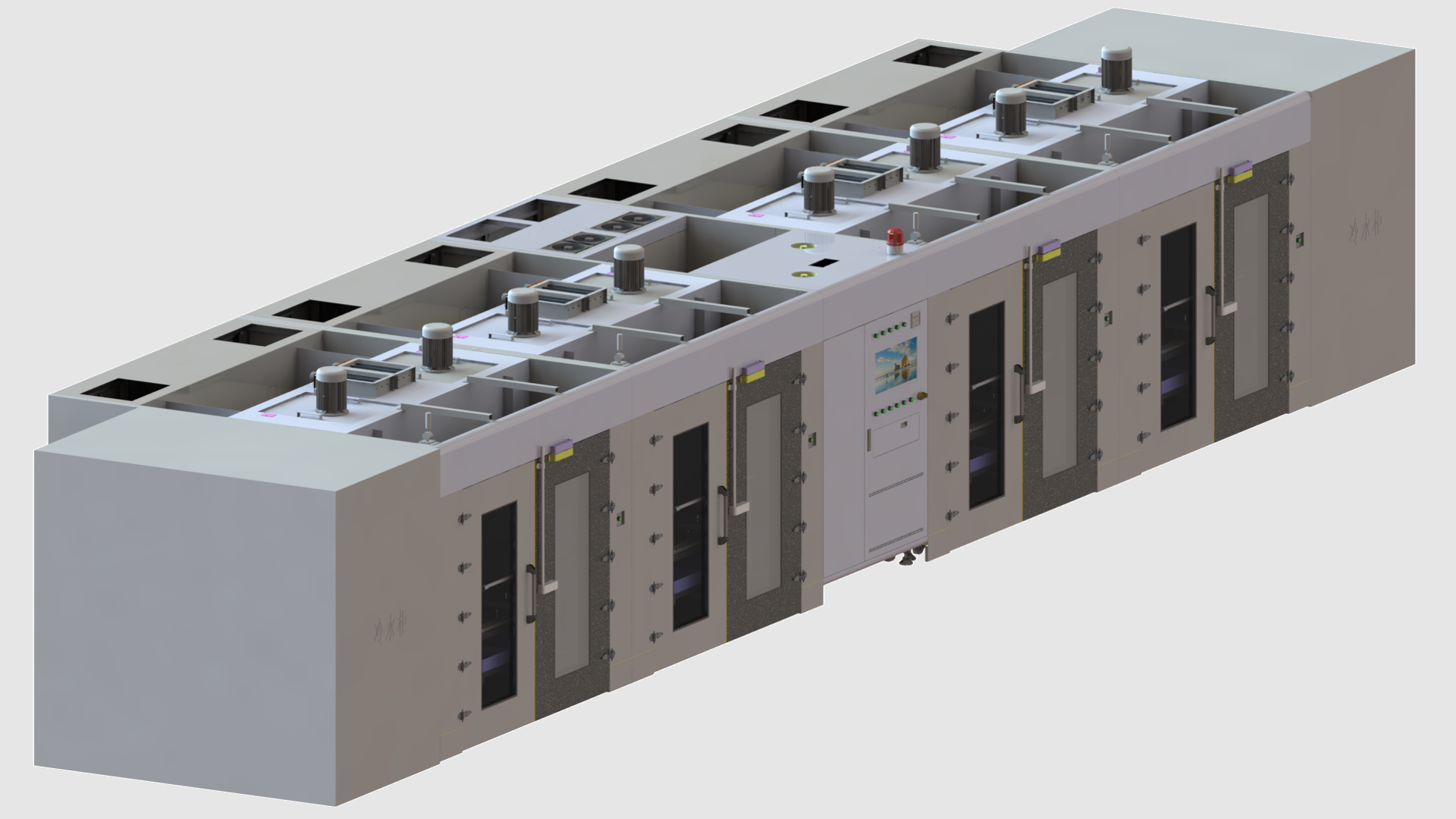
1.Dimensions:12m (L) × 2.6m (W) × 2.4m (H) per unit, with a total of 4 units.
2.Capacity Configuration:Accommodates up to 496 products for simultaneous burn‑in testing.。
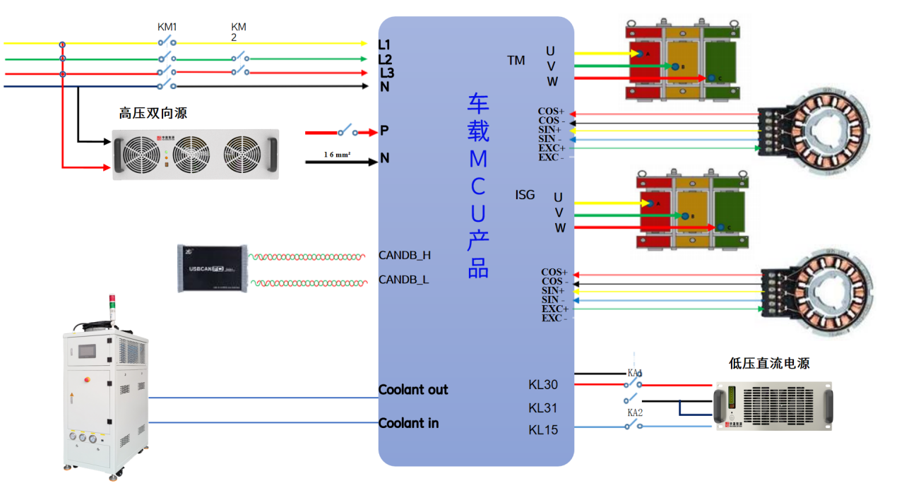
3.Environmental Control:Temperature range: 80°C ± 4°C (adjustable). Heating function only; products are cooled via the built‑in water‑cooling system throughout the burn‑in process.
4.Additional Features:Post‑cooling residual water removal function; control logic automatically switches based on product model.

This equipment is applicable to NEV MCU manufacturing enterprises, enabling early failure screening, high‑current cyclic surge testing, unmanned continuous operation, and production capacity enhancement.
Applicable Manufacturers Include:
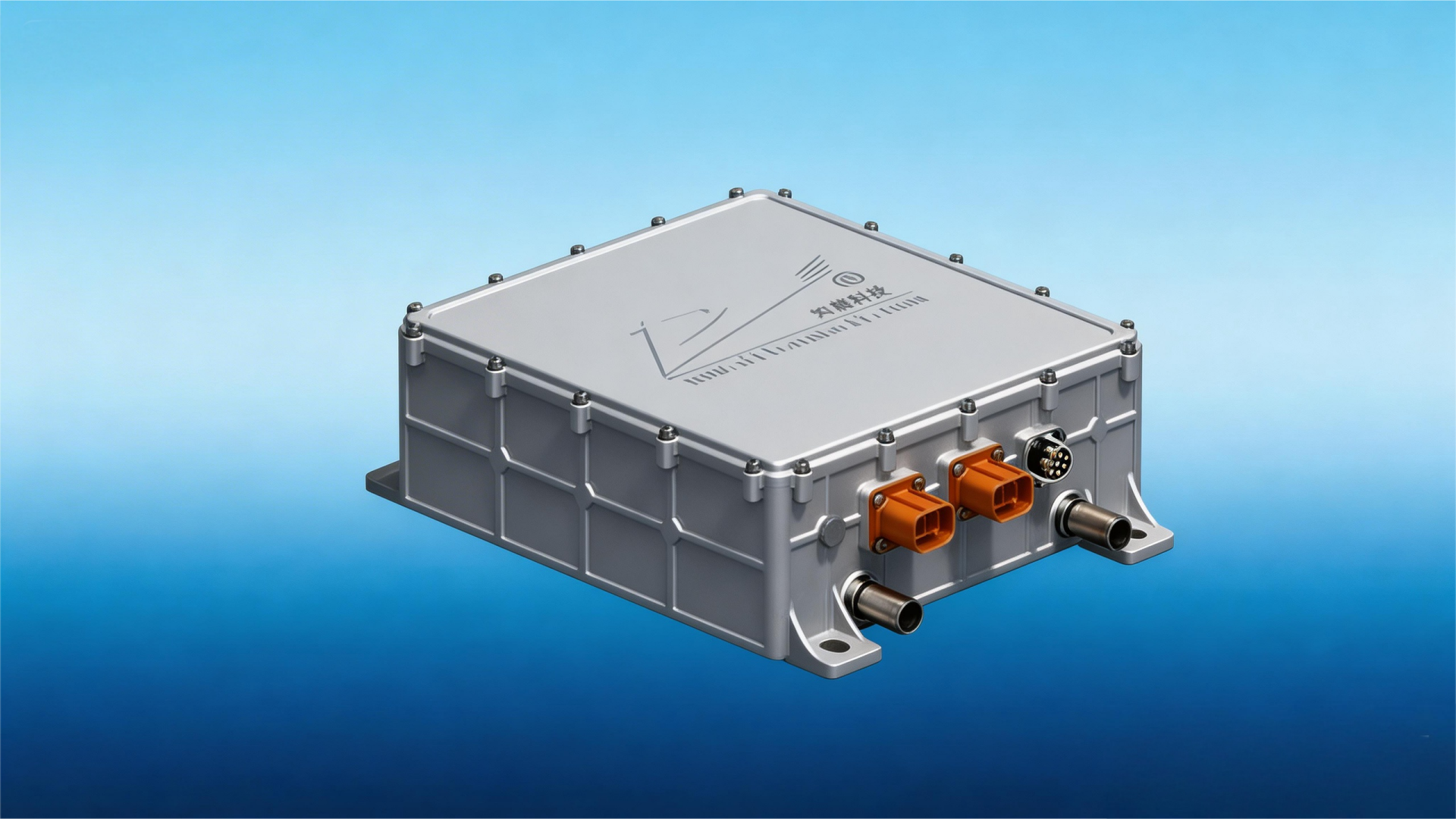
MCU Manufacturers:Producing 7kW/11kW NEV on‑board chargers and related MCU products.
NEV MCU Equipment Manufacturers:producing on‑board chargers, DC/DC converters, and other power conversion units.
MCU Contract Manufacturers (EMS Factories):undertaking MCU production for multiple brands and platforms.
NEV Component Suppliers:supplying high‑voltage connectors and other key peripheral components.



 Consultation
