

EN


Project Background
Multiple projects have been implemented at benchmark enterprises across China. With the rapid growth in demand for energy storage systems, BMS (Battery Management System) products are required to support a wide range of application scenarios, including base stations, container‑based energy storage, and ultra‑fast charging stations. Consequently, the requirements for accuracy and reliability in safety compliance, functional testing, and burn‑in testing are becoming increasingly stringent. Traditional manual testing methods are unable to achieve efficient assembly verification or real‑time temperature monitoring for multiple BMS variants, and are no longer sufficient to meet the demands of large‑scale production.
The current manufacturing processes are primarily confronted with the following challenges:
✅ Low efficiency in manual assembly and testing, making it difficult to address the demand for diverse application scenarios and multiple product specifications
✅ Lack of standardised testing procedures, compromising product consistency and safety
✅ Absence of real‑time temperature monitoring for DC busbars and copper busbars during burn‑in, resulting in high thermal anomaly risks
✅ Delayed data collection, preventing full‑process quality traceability and anomaly analysis.
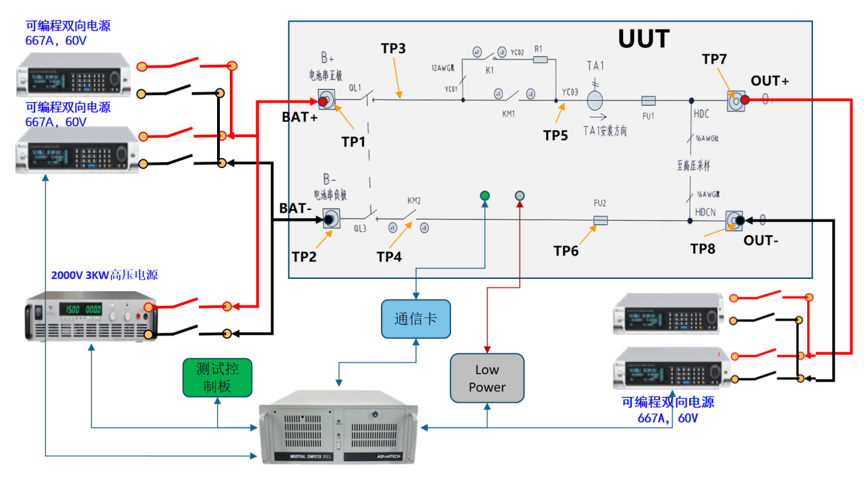
To address the above issues, the client plans to build an automated BMS assembly and test line. The system adopts a tray‑based configuration with conveyor chains and automatic plug‑in connectors, enabling fully automated safety compliance, functional, and burn‑in testing, while simultaneously monitoring critical component temperatures and logging data to ensure high reliability and full traceability for multiple BMS product types.
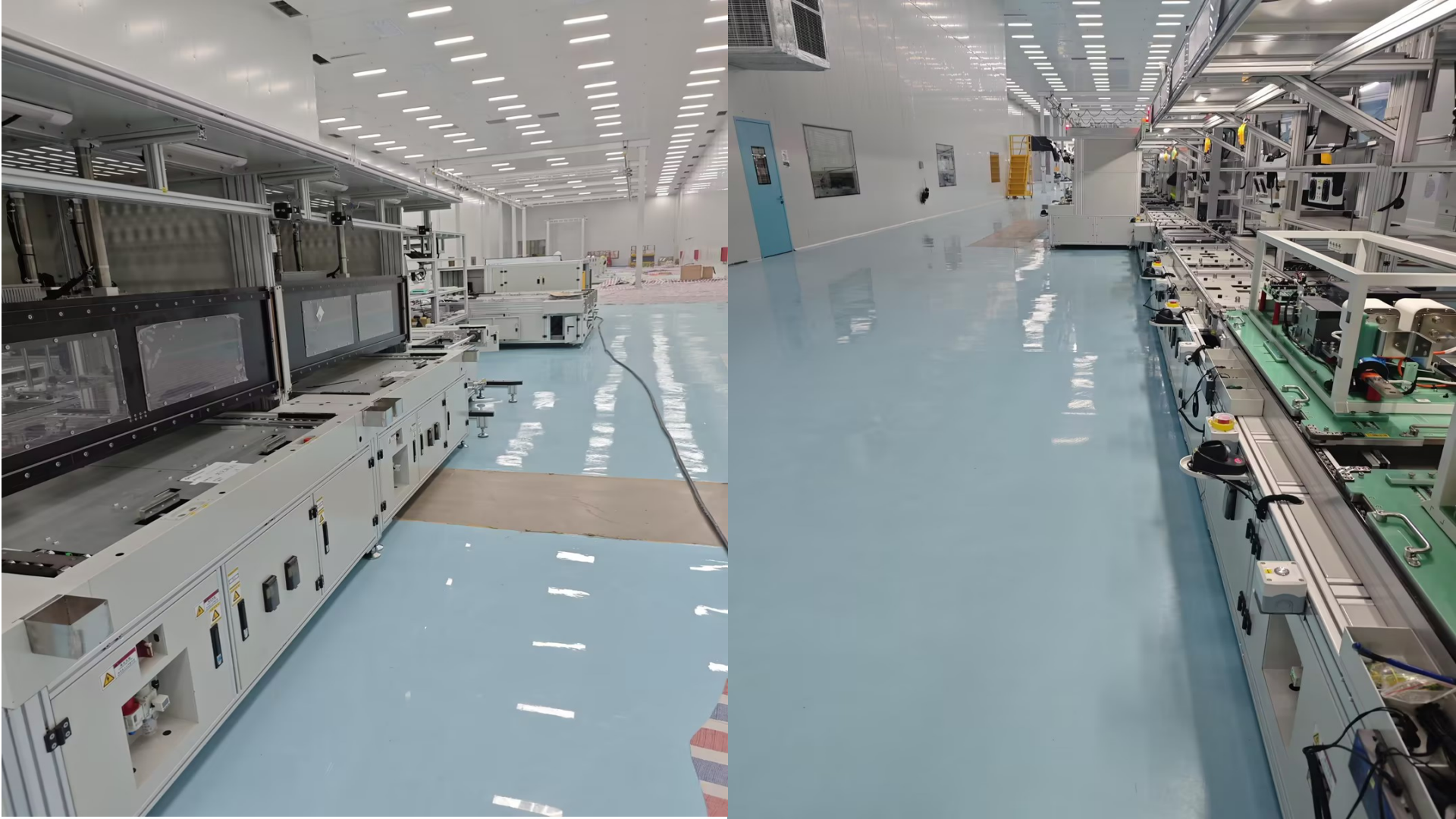
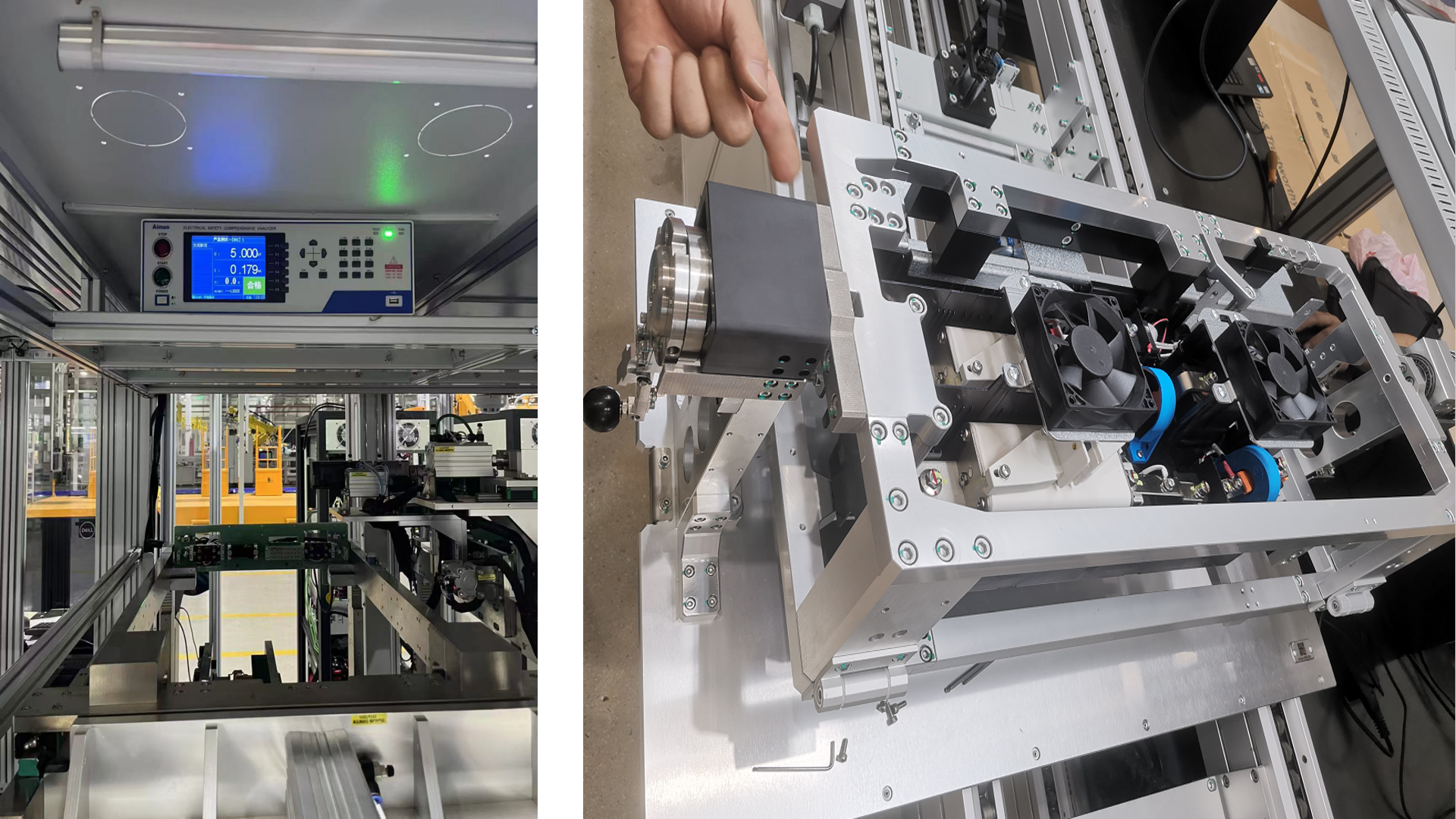
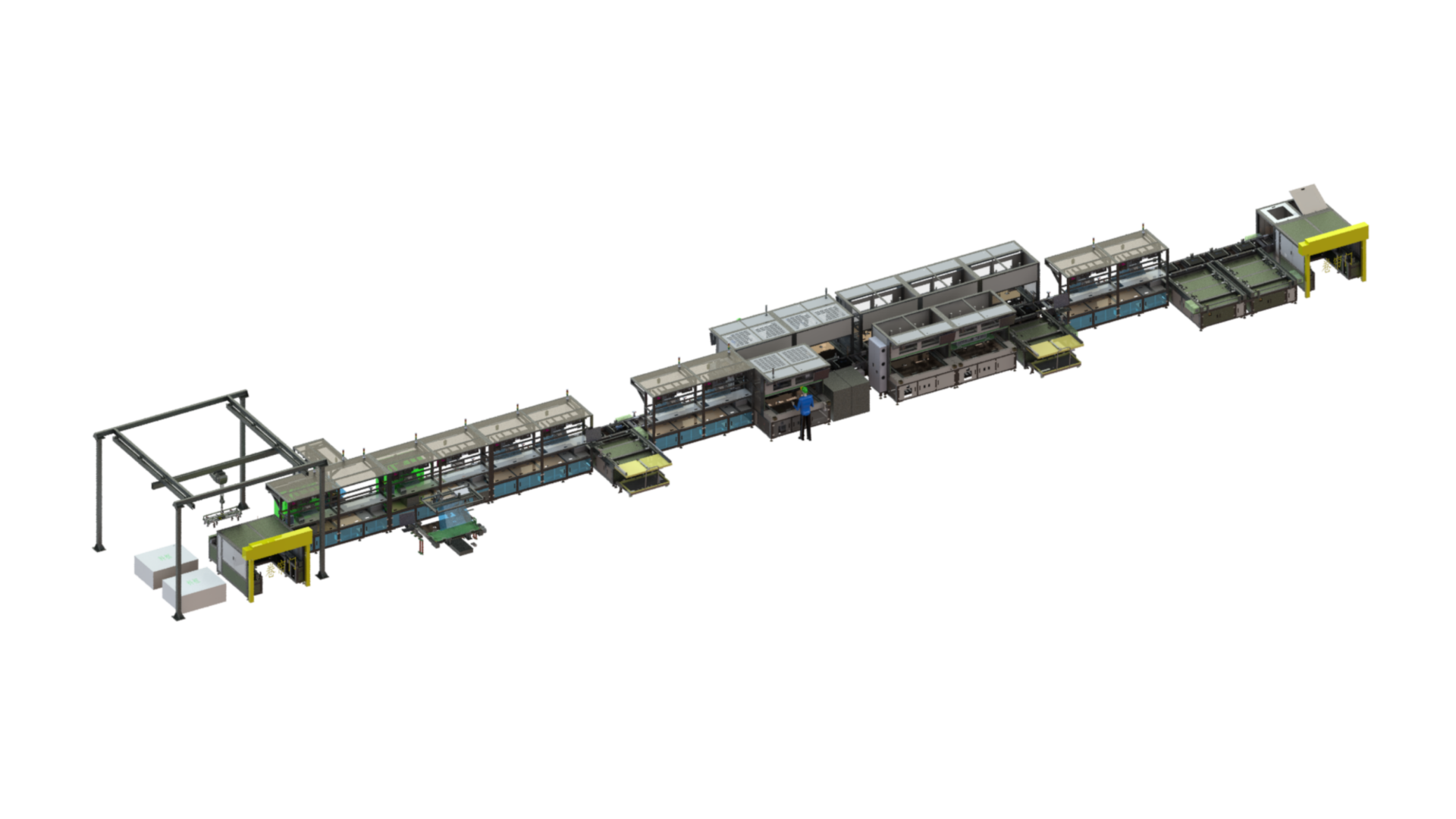
First、Equipment Overview and Core Capabilities
1.Equipment Name:Dsigned for the assembly and testing of BMS (Battery Management System) units.
2.Core Objectives:Serving three primary application scenarios: BMS for base station energy storage systems, BMS for container‑based battery energy storage systems, and BMS for modular ultra‑fast charging systems.
3.Operating Mode:Utilises a tray‑and‑conveyor chain configuration with automatic plug‑in connectors at each test station.
4.Testing Features:Dedicated to supporting the production, safety compliance testing, functional testing, and burn‑in testing of various BMS units for battery energy storage systems.
Second、Test Specifications and Parameters
1.Dimensions:Automated line: 35m (L) × 2.1m (W) × 2.0m (H).
2.Capacity Configuration:Test stations for safety compliance, functional, and burn‑in testing are customisable to meet specific production requirements.
3.Environmental Control:Ambient workshop temperature.
4.Additional Features:During burn‑in, the system monitors real‑time temperatures of DC busbars and switching copper busbars, and records the data in the burn‑in log.
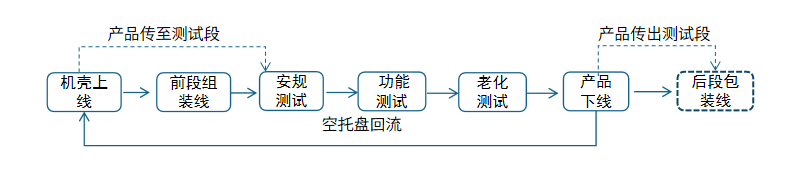
This equipment is applicable to a wide range of BMS (Battery Management System) R&D and manufacturing enterprises, enabling safety compliance verification, functional testing, high‑current burn‑in, and automatic defective sorting for BMS products.
Applicable Manufacturers Include:
Energy Storage System Integrators and Battery Pack Manufacturers:Used for incoming material inspection and finished product testing of BMS units for commercial and industrial storage cabinets, container‑based energy storage systems, and base station backup power. Key focus areas include safety compliance, communication protocol consistency, and burn‑in monitoring.
Electric Vehicle and Charging Facility Suppliers:Used for validation of onboard BMS and modular BMS for ultra‑fast charging stations, with emphasis on response capability and temperature rise monitoring under high‑current (megawatt‑level) operating conditions.
Telecom Base Station and Data Center Power Supply Manufacturers: Used for extended load burn‑in testing of 48V or high‑voltage lithium BMS units, meeting the high‑reliability requirements of outdoor and unattended environments.
Professional BMS Design Houses (ODM/OEM): Used for flexible testing of diverse, small‑batch BMS products, supporting rapid changeover across different voltage platforms and communication protocols, and enabling closed‑loop R&D data management.
PV and Microgrid Key Component Manufacturers: Used for validation of BMS units integrated with PV‑storage hybrid systems, testing their coordination logic with PCS during charge/discharge switching operations.

 Consultation
