

EN


Project Background
With the continued growth in market demand for lithium batteries in unmanned aerial vehicles (UAVs), robotics, smart home appliances, and 3C digital devices, formation and capacity grading – as one of the core processes in lithium battery manufacturing – directly impact battery capacity, lifespan, and safety performance.
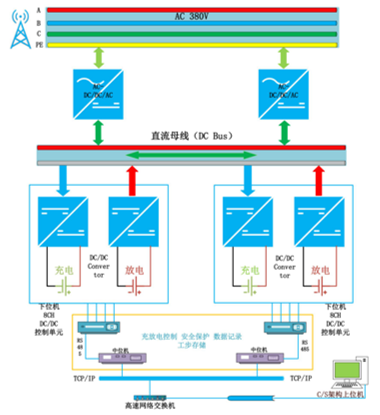
✅ High Energy‑Recovery Efficiency:Digital parallel regenerative power supplies.
✅ Highly Integrated Design:A single piece of equipment integrates the press, power supply, and stacker crane into one unit.
✅ Comprehensive Fire Safety System: Integrated CO, smoke, and temperature three‑in‑one detection; water‑and‑gas combined fire suppression system.
✅ Data Communication and Traceability: Equipment supports data communication, local data storage, and automatic data upload. The entire line can be integrated into a unified system, enabling full traceability of product and equipment information throughout the entire process. The system can also interface with the factory MES system for digitalised data management, meeting the production requirements of the complete process chain.
Guanjia's lithium battery formation and capacity grading equipment, along with its battery back‑end production line solutions, have achieved the successful transfer of leading burn‑in testing technologies, inheriting the brand's superior product genes and reputation in key areas such as temperature uniformity, power feedback efficiency, and software system architecture.
First、Equipment Overview and Core Capabilities
1.Product Specifications:Applicable to 3C cells, covering cylindrical formats (AA, AAA, and diameters from Φ18 to Φ26) for formation and capacity grading charge/discharge characteristic processing.
2.Environmental Control:Single equipment units support high‑temperature, low‑temperature, cleanliness, and fire safety requirements.
3.Loading/Unloading Methods:Tray‑based loading/unloading is compatible with AGVs, electric forklifts with pallet stacking, conveyor lines, and robotic systems.
4.System Architecture:Equipment is constructed with segmented aluminium profile frames and can feature transparent acrylic panels on one side for visitor viewing. The equipment clearance height is ≥ 3.2 metres.
Second、Specifications and Parameters
1.Dimensions and Layout:The equipment can be stacked in multiple layers to adapt to workshop ceiling heights.
2.Power Efficiency: Discharge efficiency ≥ 75%; charge efficiency ≥ 80%.
3.Power Precision: Current/voltage accuracy: ±(0.05% FS + 0.05% RD).
4.Temperature Uniformity: Temperature uniformity within each storage position can reach ±2°C.

This equipment is applicable to enterprises engaged in high‑volume battery production, enabling battery charge/discharge characteristic testing, overcharge/over‑discharge tolerance testing, cycle life testing, capacity testing, and dynamic response testing.
Applicable Scenarios Include:
Unmanned Aerial Vehicles (UAVs)
Robotics and Smart Home Appliances
3C Digital Devices
Power Tools



 Consultation
