

EN


Project Background
Multiple projects have been implemented at domestic benchmark brand enterprises and overseas manufacturing facilities. As competition in the laptop market grows increasingly fierce, the downloading of test programs (TP) and run‑in burn‑in testing prior to shipment have become critical processes for ensuring product reliability. Labour‑intensive manual testing methods have led to high labour costs and low production efficiency, making it difficult to meet the demands of high‑volume production and diversified product sizes (13‑ to 17‑inch).
The current manufacturing processes are primarily confronted with the following challenges:
✅ Low efficiency in manual loading and test changeover, with labour costs accounting for an excessively high proportion of total production costs.
✅ Inconsistent testing standards across different laptop sizes, with high risks of lid‑closing damage and interface wear.
✅ Complex management of large‑capacity burn‑in storage (1,200 units), resulting in low space utilisation and inefficient material flow.
✅ Delayed data collection, lacking full‑process automated control and anomaly traceability.
To significantly reduce testing costs and enhance automation, the client plans to build an automated functional and burn‑in testing line for laptops. The system adopts an RGV‑based storage and handling configuration, with patented test trays and connector adapters to achieve seamless integration between the TP download storage (150 units) and the burn‑in storage (1,200 units). The system ensures conveyance with a 30‑degree open‑angle lid position (without closing the lid), delivering a substantial improvement in testing efficiency and product reliability.
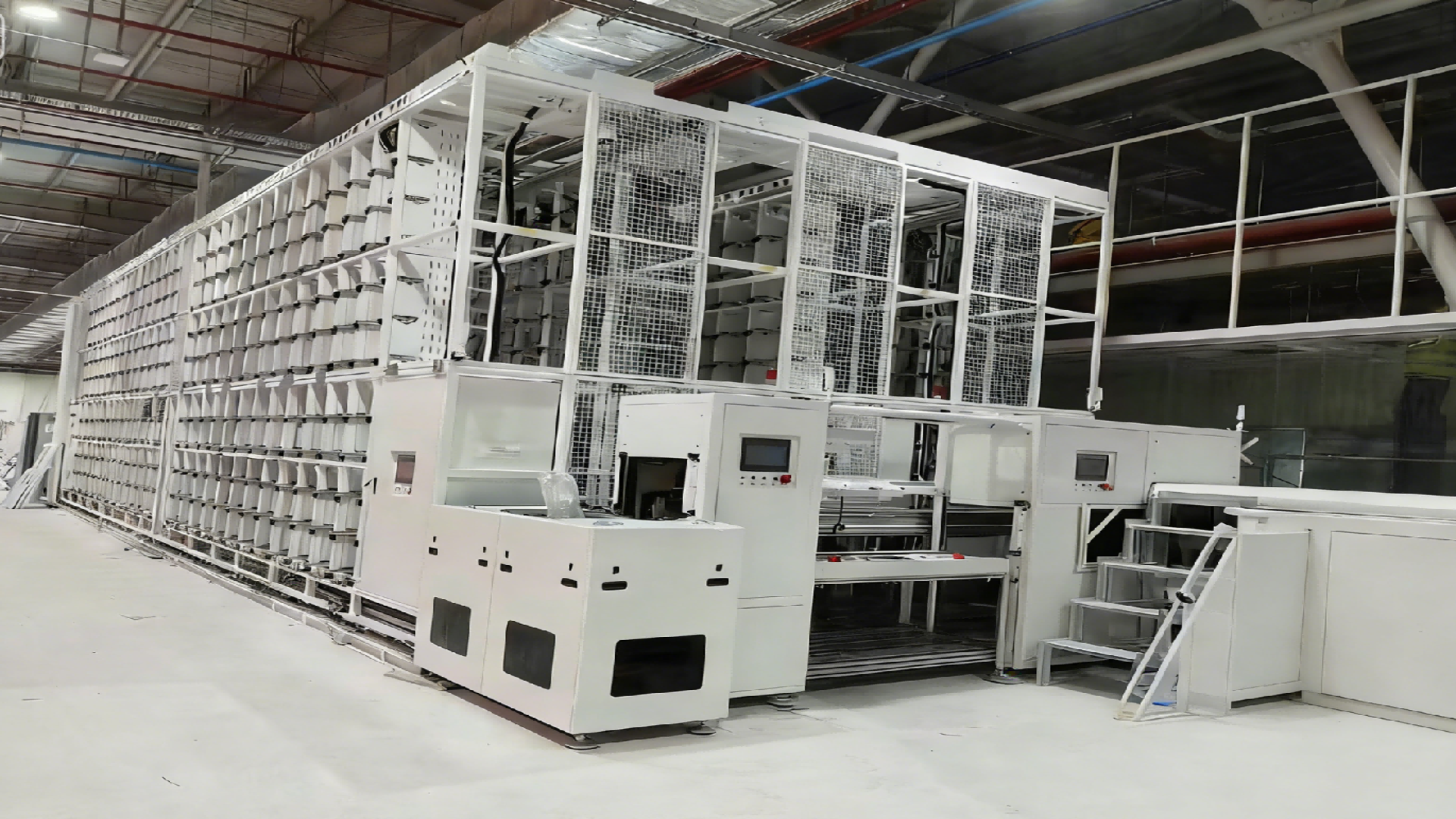
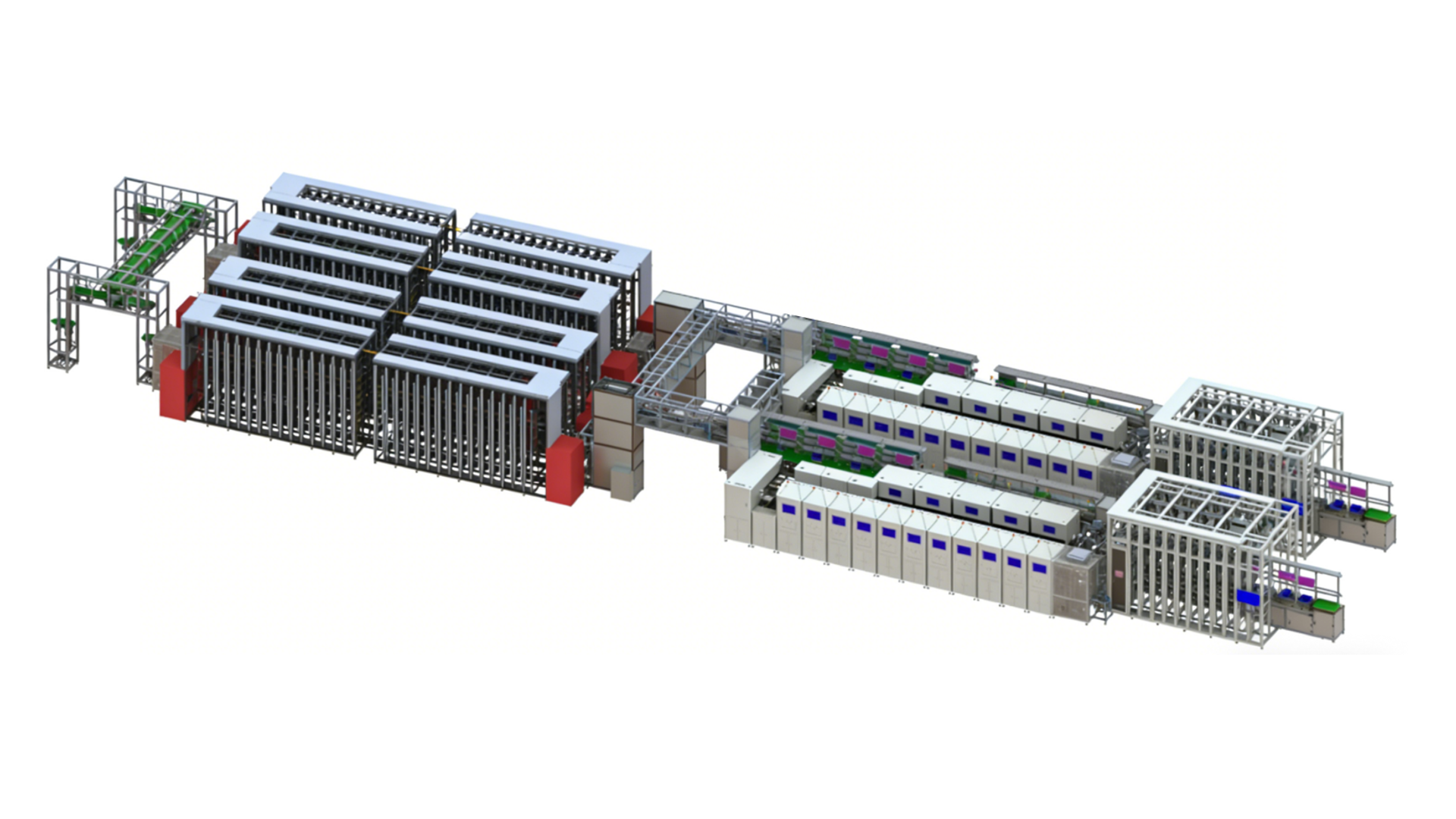
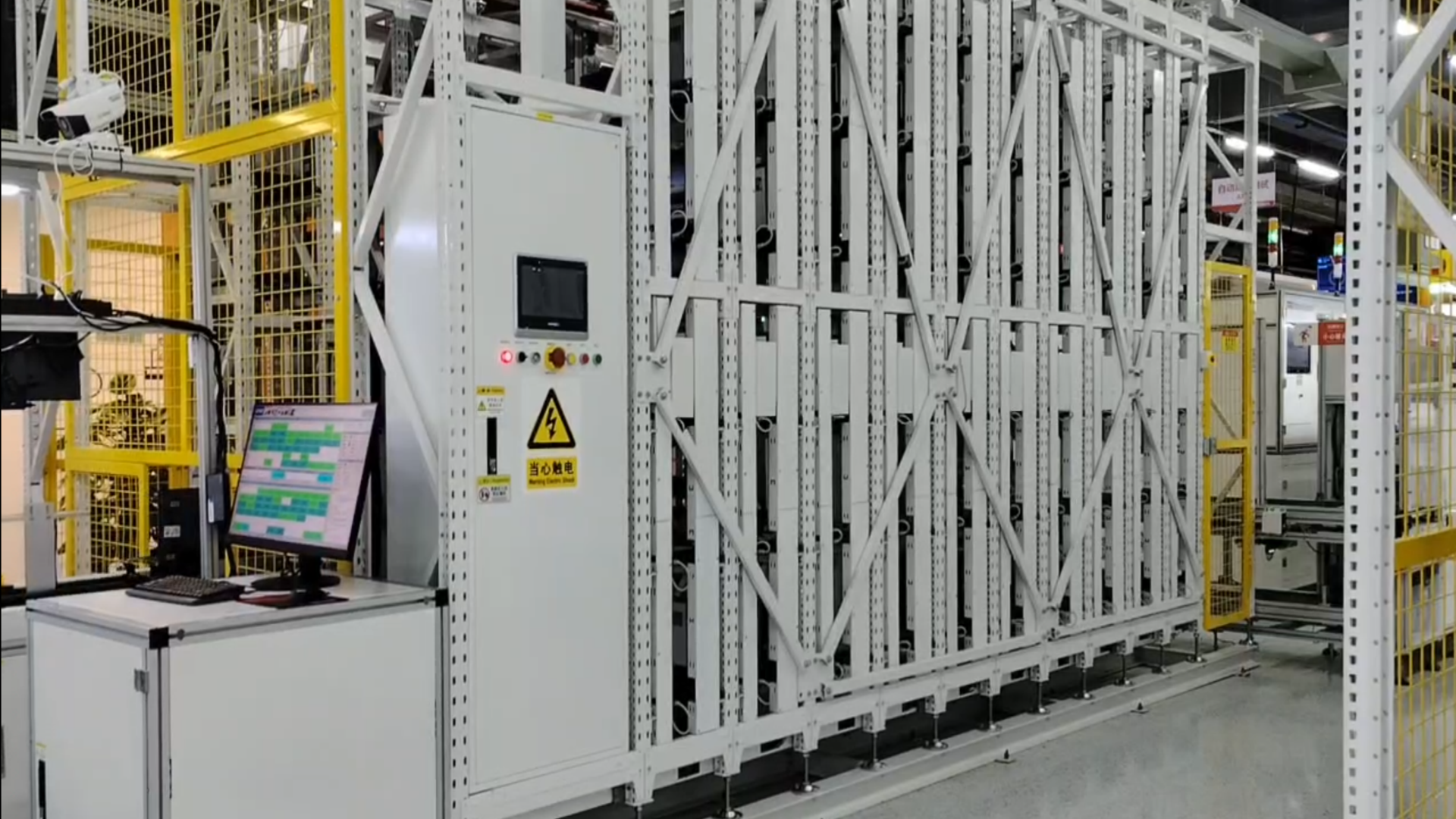
First、Equipment Overview and Core Capabilities
1.Equipment Name / Purpose:Functional and burn‑in testing equipment for laptop computers.
2.Core Objectives:To perform TP (Test Program) download and run‑in burn‑in testing for laptops prior to shipment.
3.Operating Mode:Utilises an RGV (Rail‑Guided Vehicle)‑based storage and handling configuration.
4.Testing Features:Connector adapter interfaces between the storage rack and test trays.
Second、Test Specifications and Parameters
1.Dimensions::Automated line: 45m (L) × 3.1m (W) × 2.8m (H), compatible with laptops ranging from 13‑inch to 17‑inch screen sizes.
2.Capacity Configuration:Burn‑in storage capacity: 1,200 units simultaneously;TP download storage capacity: 150 units.
3.Environmental Control: Ambient workshop temperature.
4.Additional Features:Patented test trays, seamlessly integrating burn‑in and functional testing, while ensuring laptop conveyance with a 30‑degree open‑angle lid position (without closing the lid).

This equipment is applicable to a wide range of laptop R&D and manufacturing enterprises, enabling TP (Test Program) download, run‑in burn‑in testing, and automated handling for laptop products. It features high‑capacity parallel testing capability and a patented anti‑lid‑closing tray design.
Applicable Manufacturers Include:
Laptop Brands and ODM/OEM Facilities:For pre‑production program burning and burn‑in screening to ensure shipment quality, with fast changeover capability across multiple models ranging from 13‑inch to 17‑inch screen sizes.
Electronics Manufacturing Services (EMS) Providers:Undertaking multi‑brand laptop contract manufacturing, requiring 1,200‑unit high‑capacity parallel burn‑in and RGV‑based automated storage and handling to improve production turnaround efficiency.
Motherboard and Key Component Suppliers:Producing laptop motherboards or complete systems, requiring firmware download and functional burn‑in testing prior to assembly to identify early‑stage failures in advance.
R&D Test Centres and Laboratories:Used for reliability verification during new product development, relying on patented trays to achieve 30‑degree open‑angle lid conveyance, simulating real‑world usage scenarios.
Refurbishment and Repair Service Providers:Used for program reprogramming and burn‑in testing during the refurbishment of second‑hand laptops, ensuring long‑term operational stability of refurbished units.

 Consultation
