

EN


Project Background
The ADCU (Autonomous Driving Control Unit) serves as the core in‑vehicle computing brain for intelligent vehicles at L2 to L4 levels of autonomous driving. It integrates high‑performance SoCs, MCUs, high‑speed interfaces, LiDAR/camera/millimeter‑wave radar signal processing, and functional safety and cybersecurity modules. The ADCU undertakes critical functions including environmental perception, decision‑making and planning, and vehicle control command output, making it a key component in the evolution of automotive E/E architectures toward domain‑centralised and central computing platforms.
The current manufacturing processes are primarily confronted with the following challenges:
✅ Low production efficiency, making it difficult to meet order volume growth.
✅ Poor assembly precision, compromising product consistency and reliability.
✅ Lack of process traceability, making it difficult to identify and close the loop on quality issues.
To address these issues, the client has decided to introduce an automated/semi‑automated assembly line solution to enhance production efficiency and product reliability.
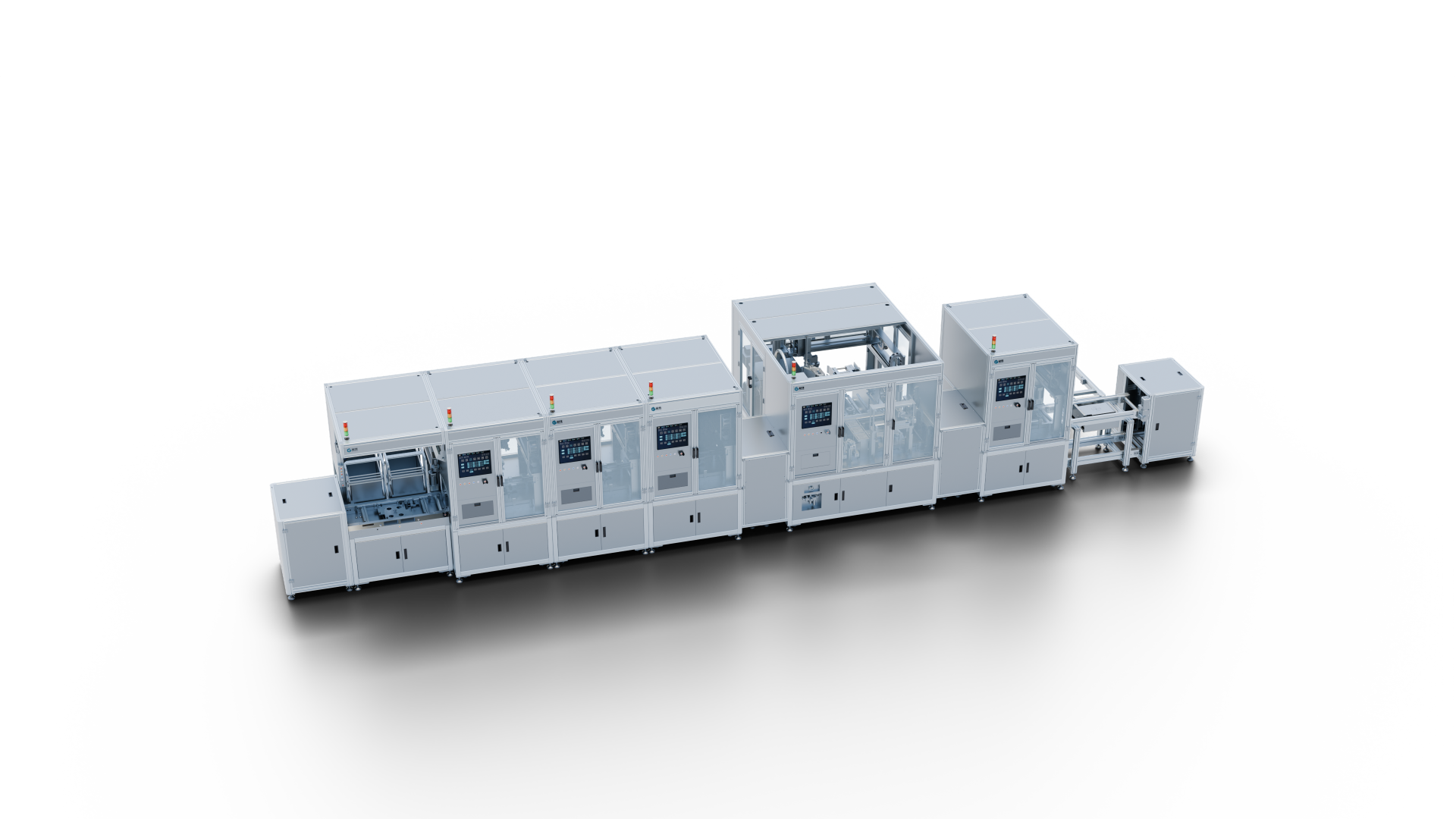
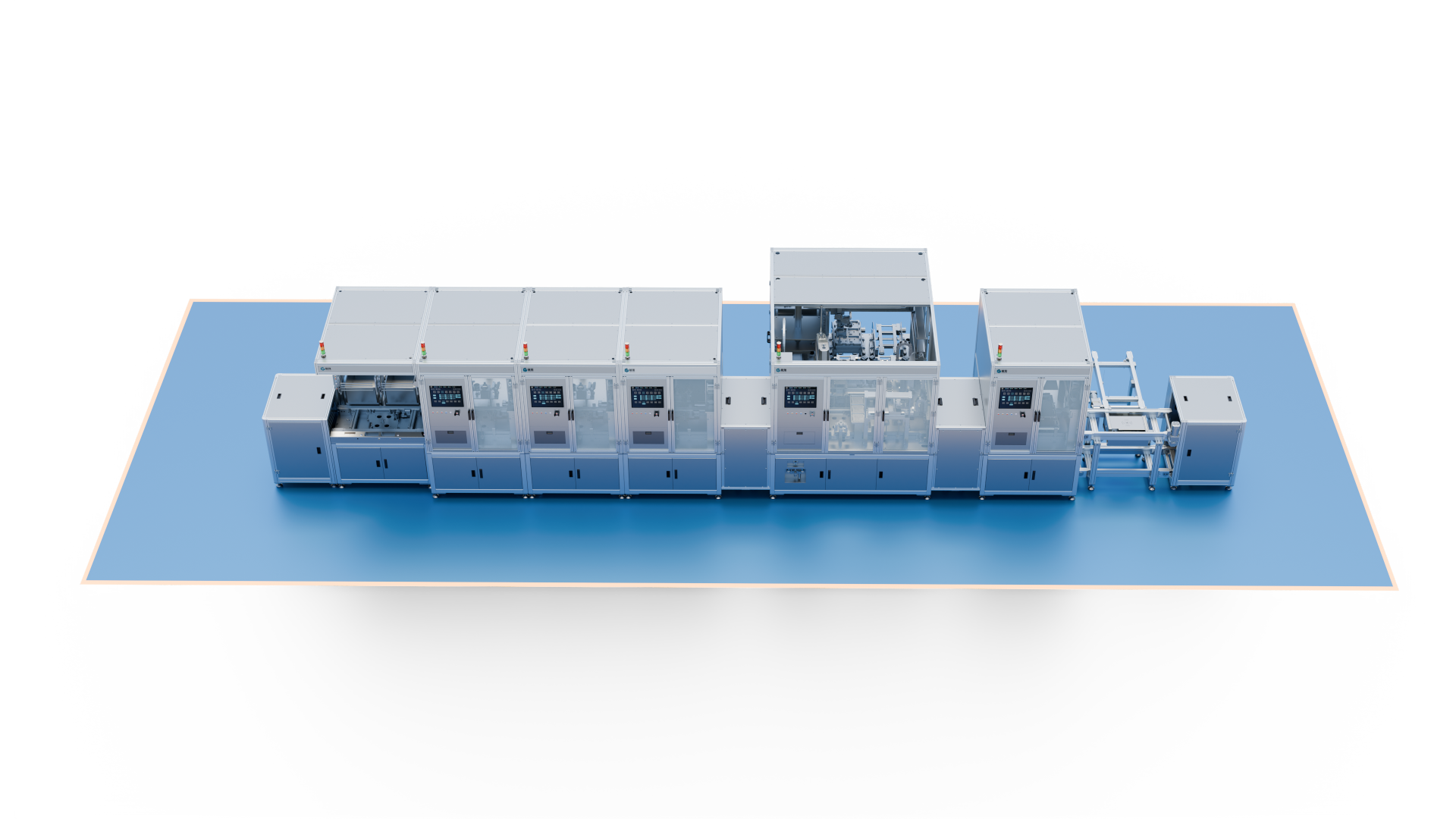
First、Introduction to Core Equipment
Fully Automated Vision‑Guided Dispensing System:Utilises 2D vision positioning for automatic application of thermal interface material on housings. The system controls dispensing trajectory, bead width, height, and output volume, with one‑click program switching for multiple product variants. Automatic 3D vision inspection of glue‑path quality triggers NG alarms when deviations are detected.
Automated PCBA Loading:Six‑axis / four‑axis industrial robots are employed for automatic handling, transfer, and loading/unloading of PCBs, replacing manual transport with stable motion and high positioning accuracy.
FCT Functional Testing:Automated docking with harness bed‑of‑nails fixtures to perform low‑voltage power‑on of the ADCU, voltage sampling of all power rails, MCU basic functionality, I/O ports, and digital signal detection. Integrated CAN/LIN/automotive Ethernet protocol analysers enable automated testing of CAN communication, Ethernet link, routing interaction, and radar/camera signal interfacing and simulation.
Assembly:Precisely assembles components using dedicated equipment, ensuring proper fit and alignment.
Fastening:Employs servo‑driven screw fastening machines with torque + angle closed‑loop control. Screws are automatically fed, with anti‑missing and anti‑re‑fastening protection. Torque data for every screw is automatically stored and linked to the product barcode, meeting OEM traceability requirements and anti‑loosening standards under vibration conditions.

This production line equipment is applicable to NEV controller manufacturing enterprises.
Applicable Manufacturers Include:
1、New Energy Vehicle OEMs (Passenger and Commercial Vehicles):Suitable for both battery electric and plug‑in hybrid passenger and commercial vehicles, the line is used for the assembly and testing of ADCU core components (controllers), ensuring seamless integration with vehicle‑level systems.
2、NEV Component and System Suppliers:Provides scalable assembly and test solutions for ADCU core component manufacturers, enabling standardised production that complies with automotive‑grade requirements and supports OEM supply chain integration.
3、New Model R&D and Prototype Development: Supports assembly and performance testing of ADCU system prototypes for new vehicle models, helping R&D teams validate ADAS functional compatibility and control logic, thereby accelerating model development and iteration cycles.
4、After‑Sales Repair and Rework:Applicable to the repair and rework of ADCU components, covering disassembly, re‑assembly, and performance re‑validation of faulty units after repair. The line also extends to ADAS system retrofitting and test/inspection applications, providing assembly and testing support for related fields.

 Consultation
