

EN


Project Background
This project has been implemented at a major domestic contract manufacturer for automotive products. As new energy vehicle technologies continue to advance, the reliability and thermal stability requirements for electronic control systems are becoming increasingly stringent. The functional stability of PCBA control boards and driver boards under high‑temperature conditions has become a critical factor in ensuring the long‑term reliable operation of e‑control systems. Traditional manual testing methods suffer from low efficiency, cumbersome changeover procedures, and inconsistent test results, making them inadequate for the high‑intensity, high‑precision demands of mass production.
The current manufacturing processes are primarily confronted with the following challenges:
✅ Low manual testing efficiency and frequent model changeovers, making it difficult to respond rapidly to production demands.
✅ Lack of standardised manual operating procedures, compromising test data consistency.
✅ High energy consumption and labour costs associated with high‑temperature testing.
✅ Untimely data collection and an incomplete quality traceability system.
To address the above issues, the client plans to introduce an automated high‑temperature burn‑in test line. The system features automatic rail width adjustment for rapid changeover across multiple models, and performs full‑process functional testing at 110°C. This solution will significantly improve testing efficiency and data accuracy, ensure stable product performance under high‑temperature conditions, and help the client build a highly reliable, intelligent testing platform.
First、 Equipment Overview and Core Capabilities
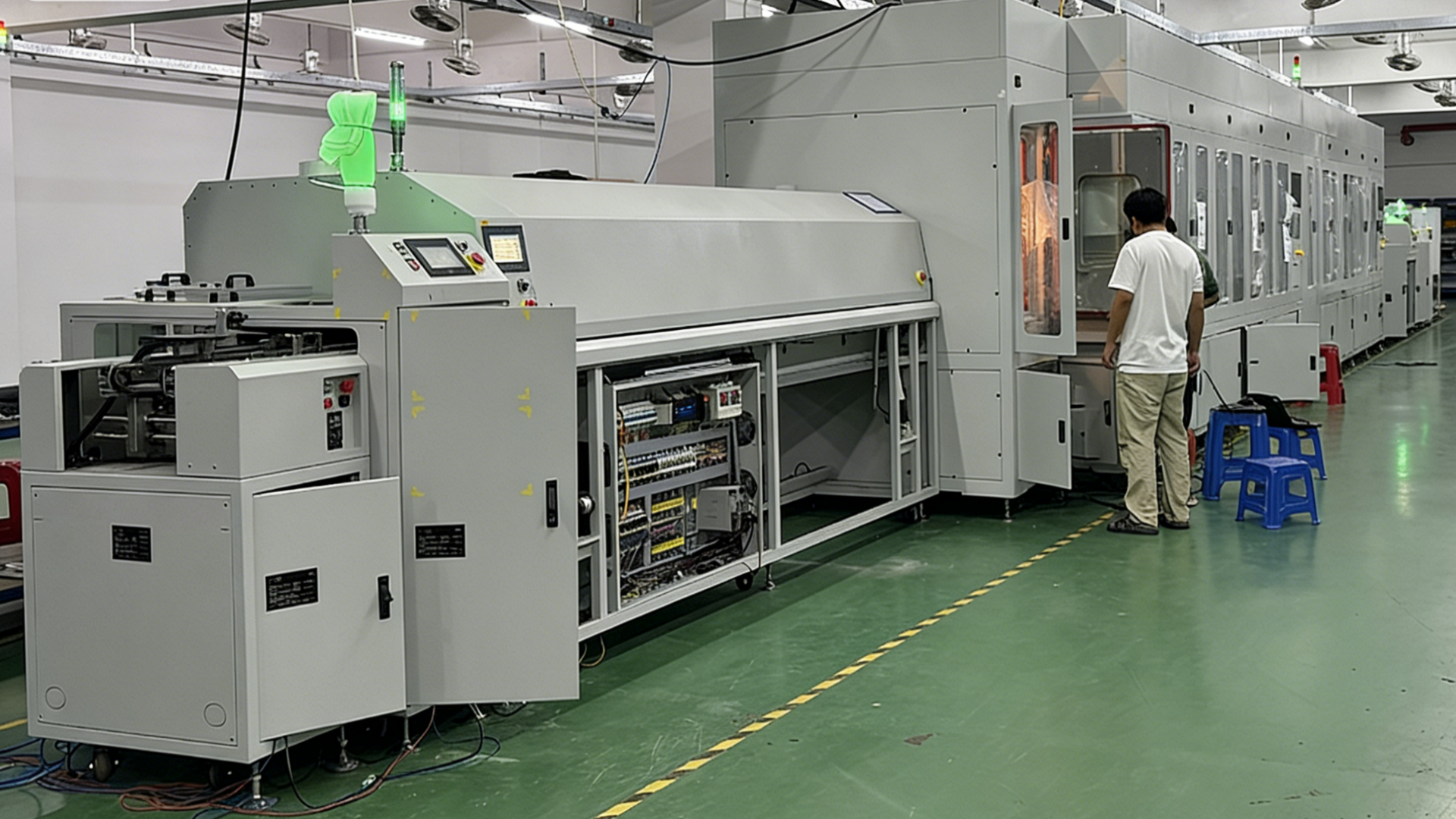
1.Equipment Name / Purpose:High‑temperature burn‑in system for PCBA control boards and driver boards used in NEV electronic control products.
2.Core Objectives:To perform functional testing of PCBA driver boards under high‑temperature conditions, ensuring full functionality at 110°C.
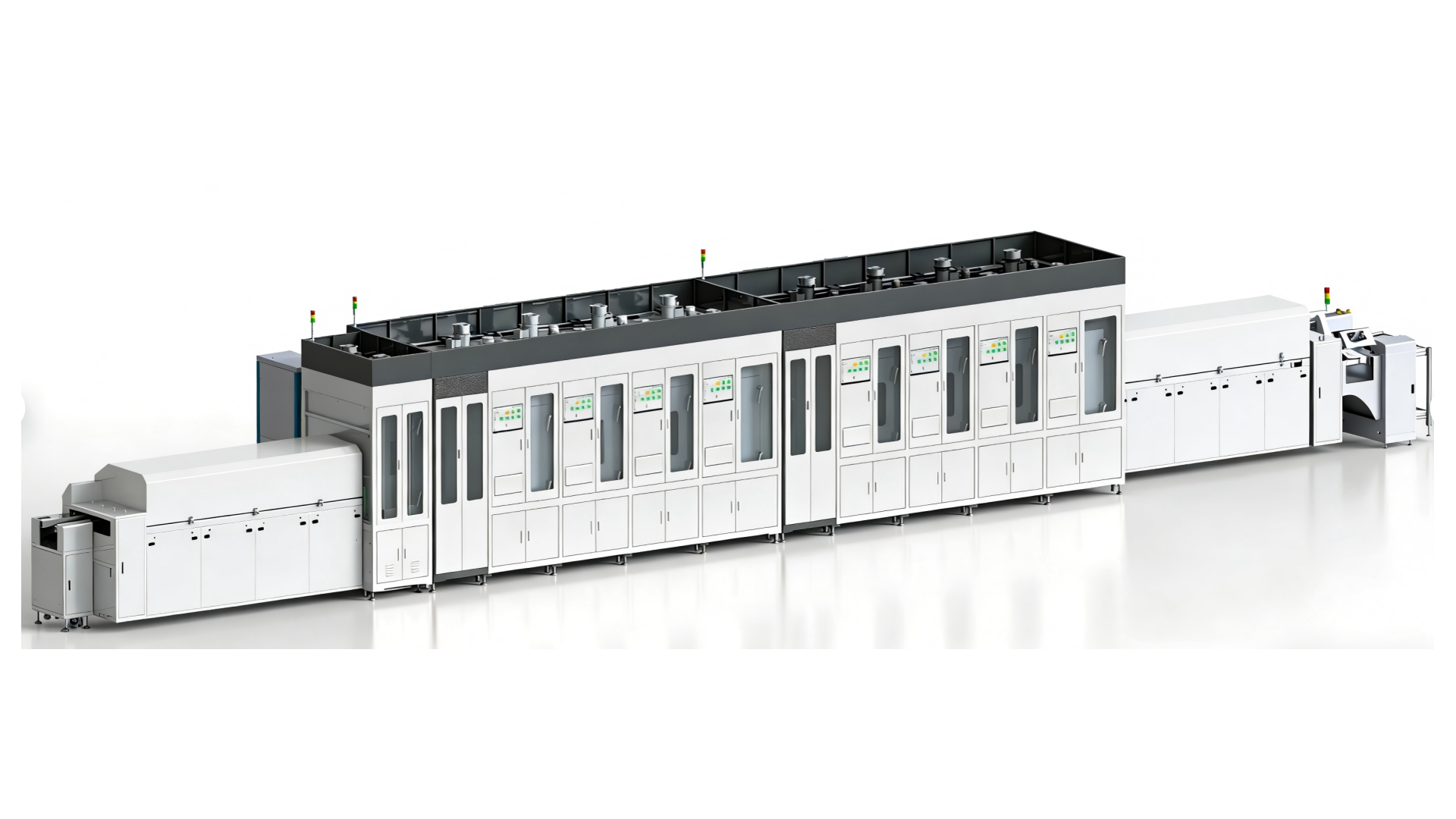
3.Operating Mode:Utilises a bare‑board conveyance system with automatic rail width adjustment for rapid model changeover. Model changeovers are frequent, occurring at least twice per day.
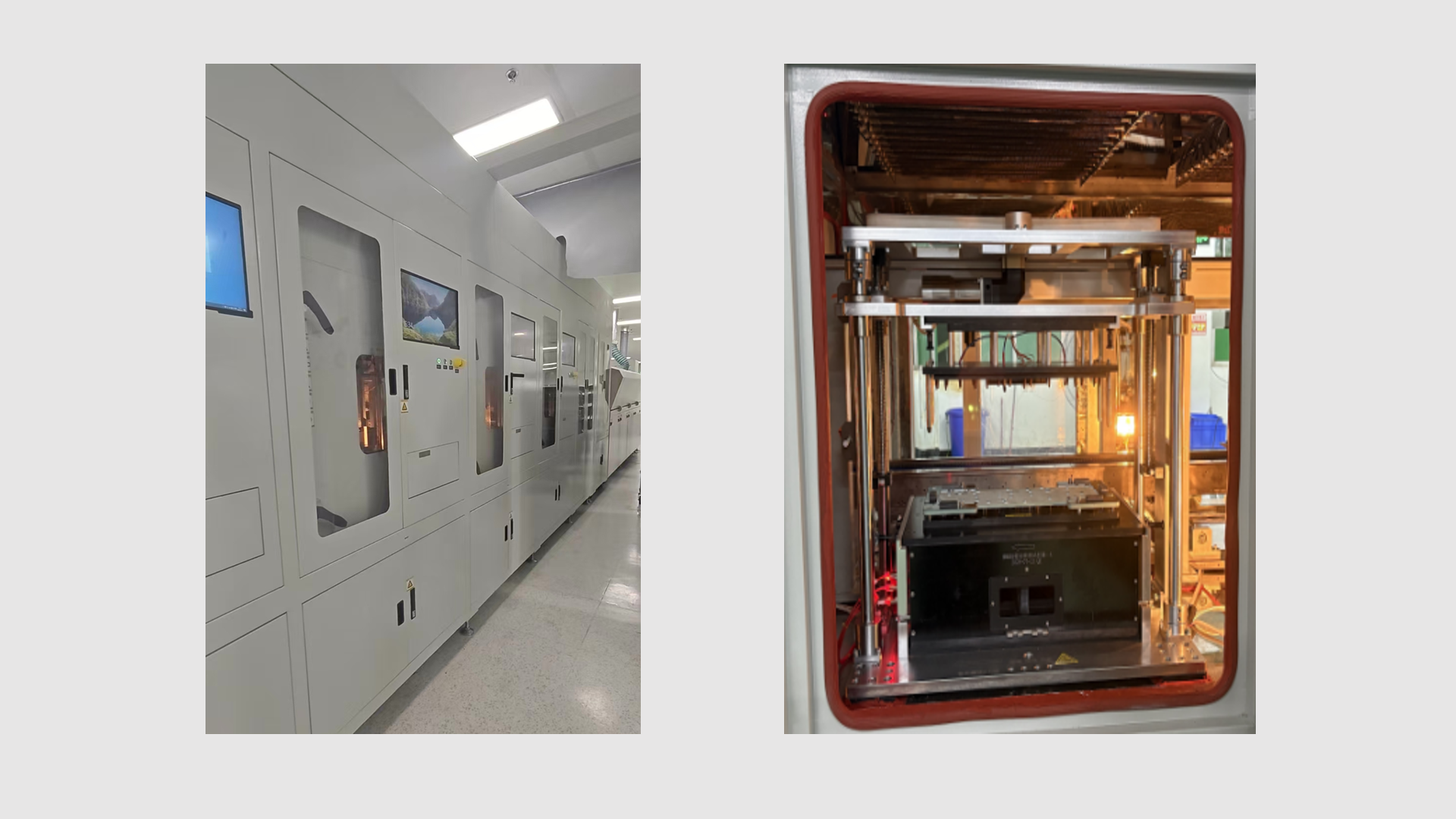
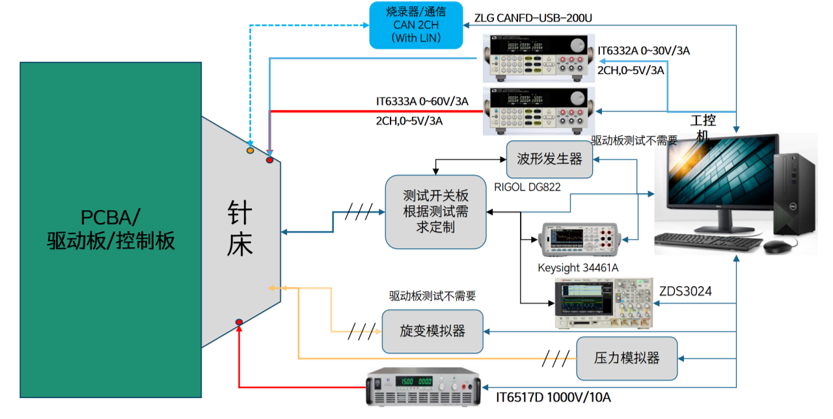
4.Testing Features:The entire testing process – from PCBA to the bed‑of‑nails fixture – is conducted under sustained high‑temperature conditions, maintained at 110°C ± 3°C.
Second、Test Specifications and Parameters
1.Dimensions:25m (L) × 1.4m (W) × 2.4m (H).
2.Capacity Configuration:Accommodates up to 8 bed‑of‑nails test stations simultaneously, with each station operating independently without interference.。
3.Environmental Control:Temperature range: 110°C ± 3°C (adjustable).
4.Additional Features:The test sequence comprises over 1,400 test items. PCBA boards undergo heating and cooling cycles before and after entering the test stations.

This equipment is applicable to manufacturers of NEV MCU and multi‑in‑one products, enabling early failure screening, high‑current cyclic surge testing, unmanned continuous operation, and production capacity enhancement.
Applicable Manufacturers Include:
MCU Multi‑in‑One Product Manufacturers
NEV MCU Multi‑in‑One Equipment Manufacturers (On‑Board Chargers, DC/DC Converters, etc.)
MCU Multi‑in‑One Product Contract Manufacturers (EMS Factories)
NEV PCBA Finished Product Suppliers

 Consultation
