

EN


Multiple projects have been implemented at top‑tier domestic R&D enterprises and leading international contract manufacturers. With the rapid growth in demand for high‑power power supply modules, IBC (Intermediate Bus Converter) brick power supplies face the dual challenge of high‑power loading and heat dissipation control during burn‑in testing across a wide power range (200W to 2000W, peak 3000W). Traditional manual testing methods are unable to achieve efficient loading, accurate load simulation, or automatic sorting of defective products, thereby compromising production efficiency and quality stability.
The current manufacturing processes are primarily confronted with the following challenges:
✅ Low efficiency in manual loading, unloading, and defective sorting, failing to meet high‑capacity production demands.
✅ Inconsistent testing standards for high‑power and low‑power load testing, resulting in insufficient data consistency.
✅ Difficulty in heat dissipation control during high‑power burn‑in, with inadequate real‑time monitoring of abnormal temperature rises.
✅ Lack of full‑process data traceability, leading to inefficient quality anomaly identification and analysis.
To address the above issues, the client plans to build an automated IBC brick power supply burn‑in testing line. The system employs an RGV‑based storage and handling configuration or manual burn‑in cabinets, combined with Guanjia's self‑developed socket interface boards, to achieve fully automated loading, load burn‑in, unloading, and defective sorting. This ensures precise testing across a wide power range at temperatures below 80°C, significantly enhancing testing efficiency and product reliability.
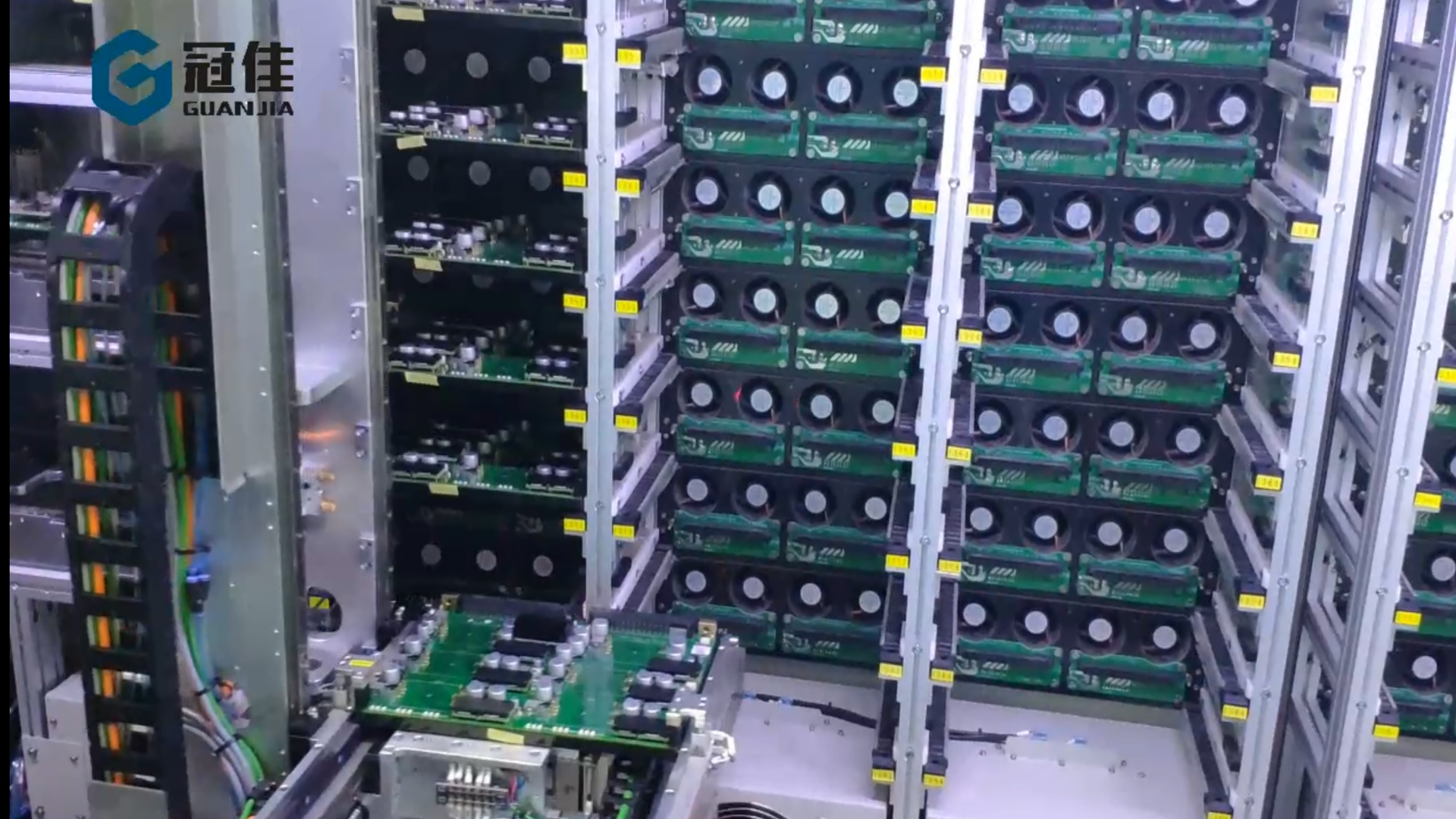
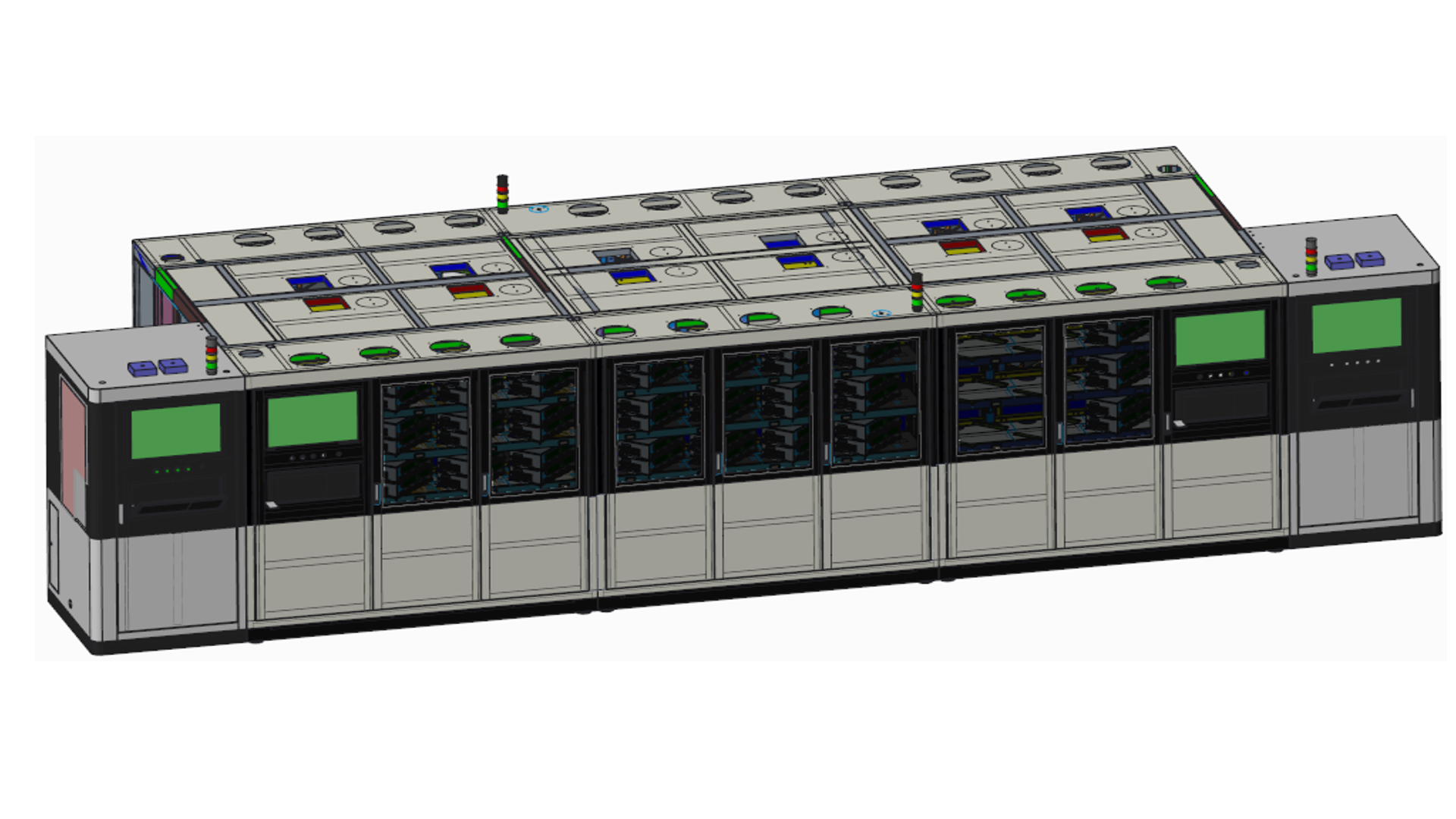
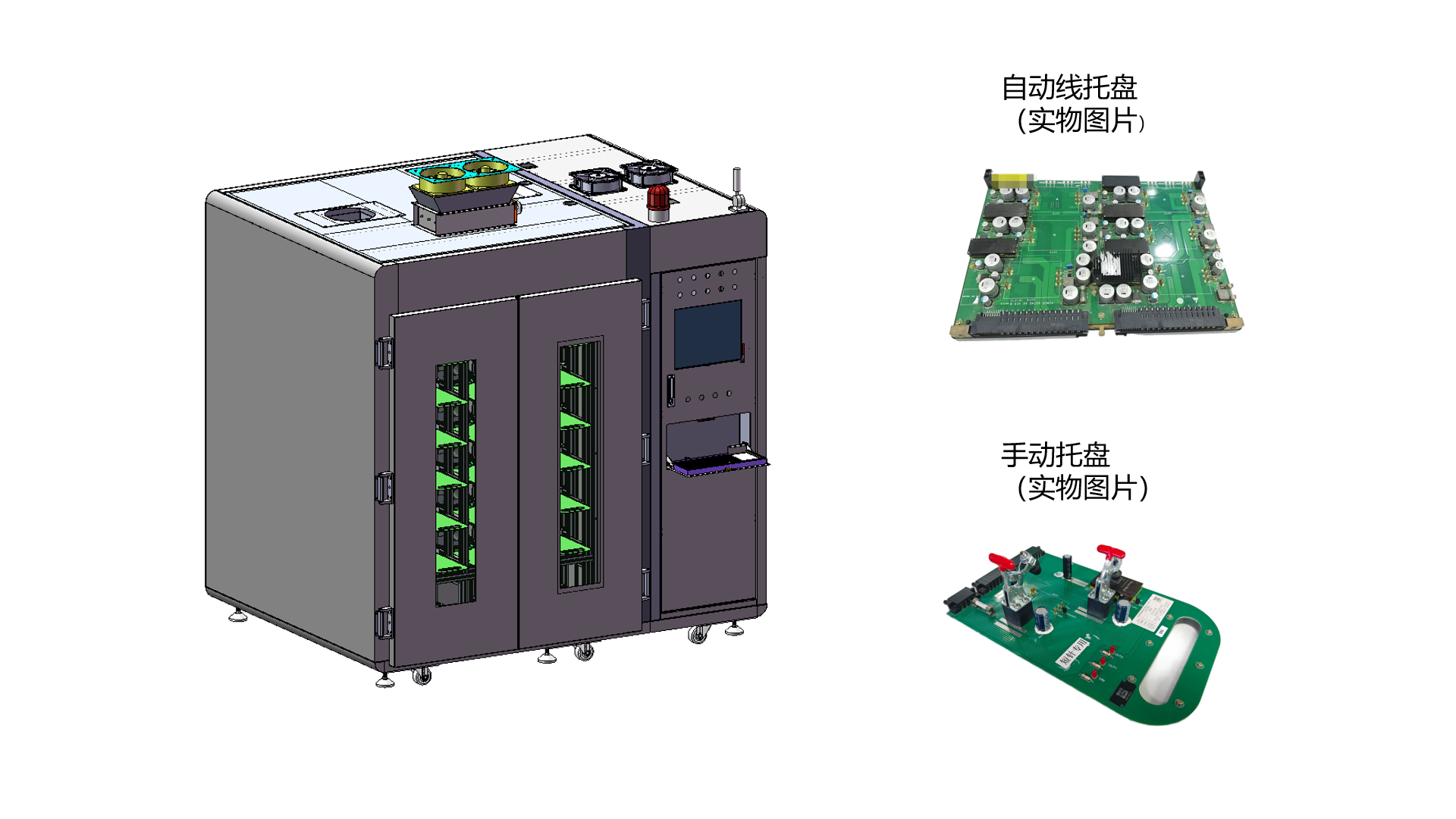
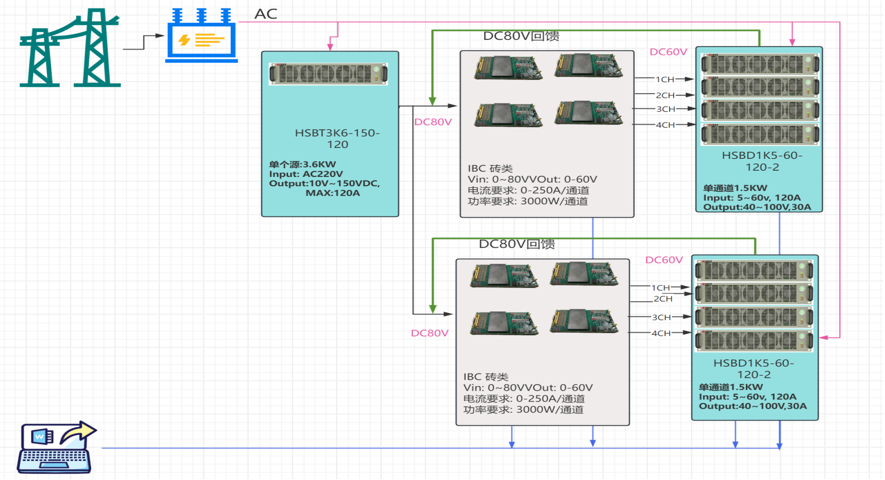
First、Equipment Overview and Core Capabilities
1.Equipment Name / Purpose:Designed to enable automated loading, burn‑in, unloading, and defective sorting for IBC brick power supplies.
2.Core Objectives:To provide comprehensive load burn‑in solutions across a wide power range, covering both high‑power and low‑power requirements from 200W to 2000W (peak 3000W).
3.Operating Mode:Utilises either an RGV (Rail‑Guided Vehicle)‑based storage and handling configuration or manual burn‑in cabinets.。
4.Testing Features:Dedicated socket interface boards provide integrated power supply, loading, temperature control, and voltage/current monitoring.
Second、Test Specifications and Parameters
1.Dimensions:Automated line: 9m (L) × 2m (W) × 2.4m (H); Manual cabinet: 2.3m (L) × 1.6m (W) × 2.0m (H).
2.Capacity Configuration:Supports two configurations: 1200 units or 48 units simultaneously.
3.Environmental Control:Maintains temperature below 80°C.
4.Additional Features:Equipped with Guanjia's self‑developed socket interface boards, providing integrated mechanical stress and thermal analysis capabilities.

This equipment is applicable to manufacturers of brick power supplies (IBC), enabling high‑current load verification (200W–2000W), ON/OFF surge testing, high‑power load burn‑in, and automatic defective sorting.
Applicable Manufacturers Include:
Server and Data Center Power Supply Manufacturers::Primarily supplying VRM modules for CPU/GPU power delivery, requiring high‑current burn‑in and high‑reliability screening to ensure long‑term stable operation under high‑power density conditions.
Communications Equipment Power Supply Suppliers:Providing power modules for base stations and transmission equipment, requiring high‑temperature environment simulation (below 80°C) and long‑term stability testing to meet stringent application requirements in outdoor or confined spaces.
Industrial Automation and New Energy Vehicle Electronics Manufacturers:Producing industrial control power supplies and automotive DC‑DC converters, requiring current surge and thermal cycling verification to cope with load fluctuations under complex operating conditions.
Professional Power Module Design Houses (ODM/OEM):Offering customised VRM solutions, requiring a flexible testing platform with universal interface board design and MES data traceability to accommodate verification needs for diverse, small‑batch production.
Electronics Manufacturing Services (EMS) Providers:Undertaking multi‑brand power supply contract manufacturing, requiring high‑capacity parallel testing (up to 1200 units) and automatic defective sorting to improve first‑pass yield and production turnaround efficiency.

 Consultation
