

EN


Project Background
Multiple projects have been implemented at benchmark foreign‑invested enterprises in China. With the surge in computing power demand for AI agents, VRM power modules are confronted with the dual challenge of high‑current load testing (ranging from 10A to 1000A) and high‑temperature burn‑in. Heat dissipation control becomes increasingly difficult under high‑load operation, and conventional testing methods are inadequate for accurately simulating real‑world operating conditions and effectively managing thermal stress.
The current manufacturing processes are primarily confronted with the following challenges:
✅ Uneven heat dissipation during high‑current burn‑in, with insufficient temperature control precision, compromising test reliability.
✅ Low efficiency in manual loading, unloading, and sorting, failing to meet high‑frequency testing demands
✅ Dispersed socket connections and multi‑parameter monitoring (voltage, current, ON/OFF surge, temperature), making data traceability difficult.
✅ Insufficient analysis of mechanical stress and thermal fatigue on equipment under high‑temperature conditions, making it difficult to identify potential failure risks in a timely manner.
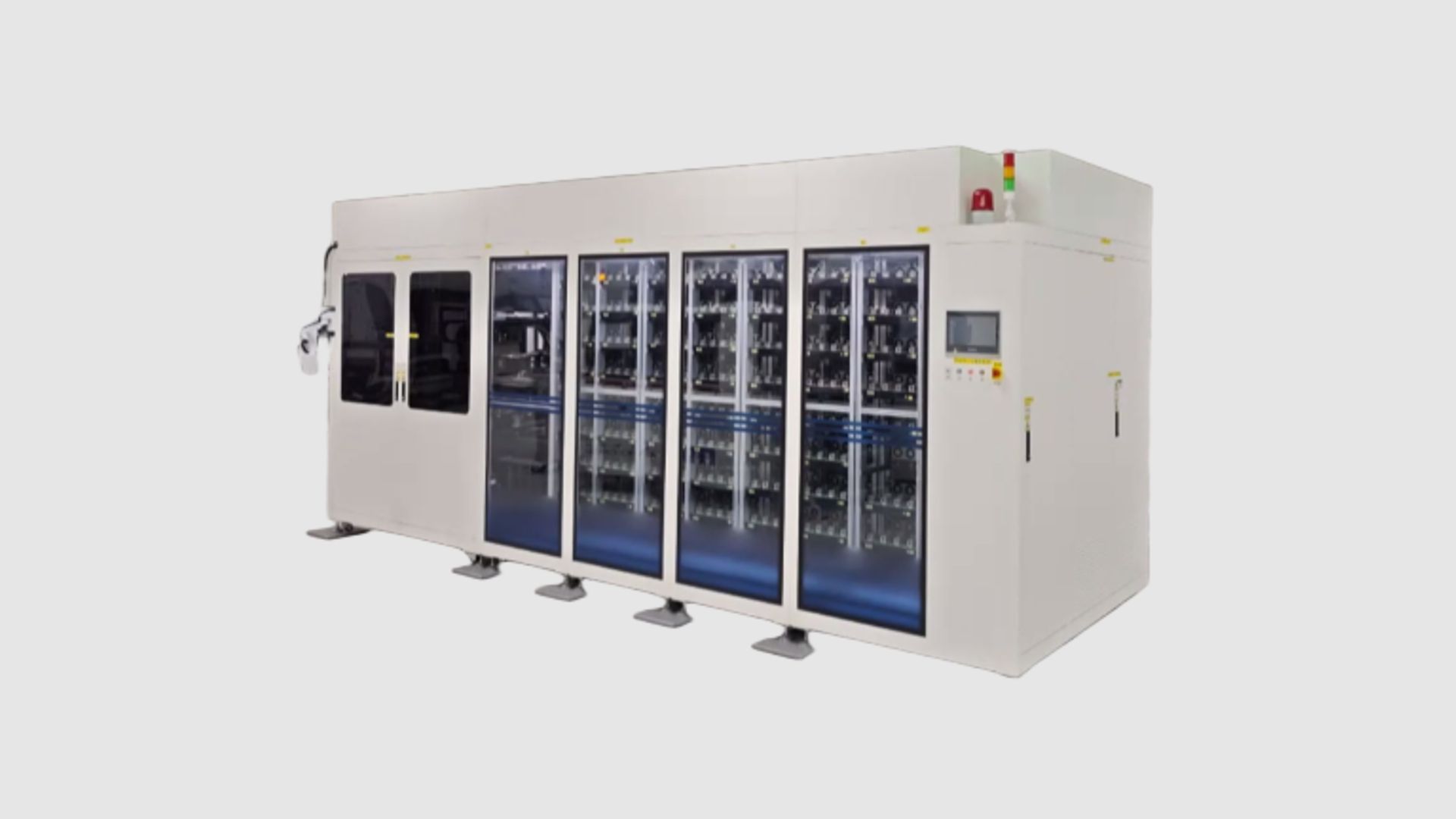
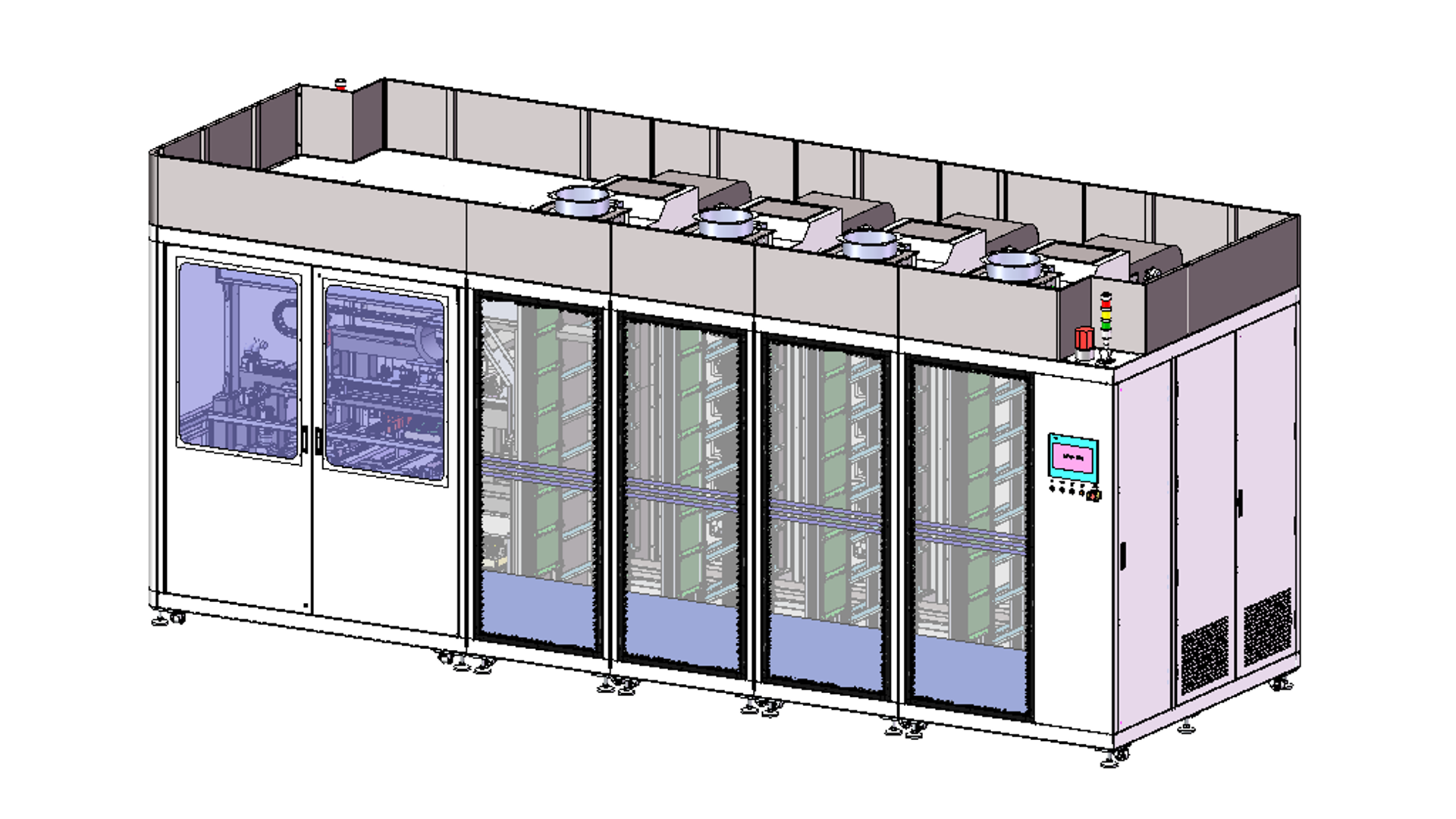
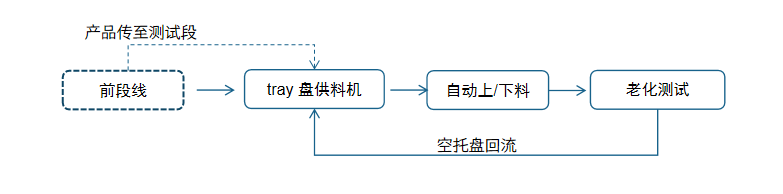
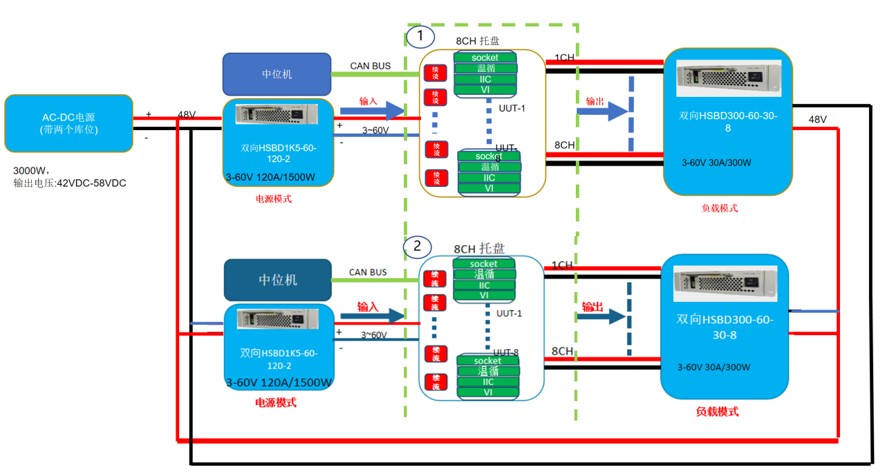
To overcome the heat dissipation challenges associated with high‑current testing, the project entails the construction of an automated VRM burn‑in testing line. The system employs a conveyor track and test tray configuration to automate the entire process of loading, burn‑in, unloading, and defective sorting. Equipped with Guanja's self‑developed socket, it provides integrated power supply, loading, temperature control, and stress analysis, ensuring accurate load testing at temperatures below 80°C, thereby significantly enhancing testing efficiency and reliability.
Frist、Equipment Overview and Core Capabilities
1.Equipment Name/Purpose:Designed to enable automated loading, burn‑in, unloading, and defective sorting for VRM modules.
2.Core Objectives: To perform load testing on VRM modules with a current range of 10A to 1000A, while monitoring voltage, current, ON/OFF surge, and temperature during the testing process.
3.Operating Mode: Utilises a conveyor track and test tray transport system, with automatic docking between trays and test stations during the testing phase.
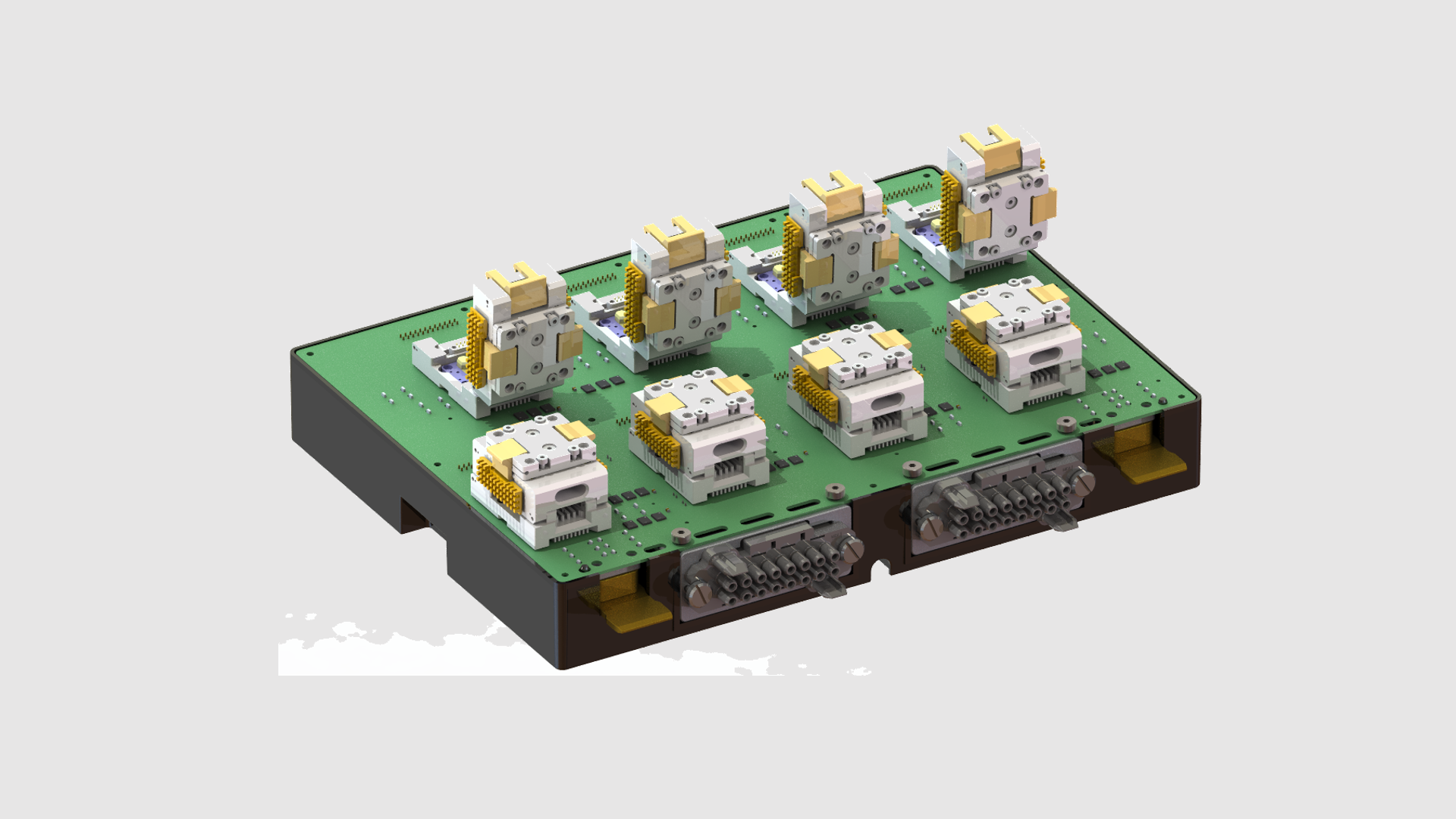
4.Test Method:Socket‑based connection providing integrated power supply, loading, temperature control, and voltage/current monitoring.
Second、Test Specifications and Parameters
1.Dimensions:8m (L) × 1.8m (W) × 2.2m (H).
2.Capacity Configuration: Supports three capacity configurations: 256, 512, or 1024 units simultaneously.
3.Environmental Control:Maintains temperature below 80°C.
4.Additional Features:Equipped with Guanjia's self‑developed socket, which provides integrated mechanical stress and thermal analysis capabilities.
This equipment is applicable to Voltage Regulator Module (VRM) manufacturers, providing capabilities for high‑current load verification (10A–1000A), ON/OFF surge testing, multi‑capacity parallel burn‑in, and automatic defective sorting.
Suitable Manufacturers Include:
Server and Data Center Power Supply Manufacturers:Primarily supplying VRM modules for CPU/GPU power delivery, requiring high‑current burn‑in and high‑reliability screening.
Communications Equipment Power Supply Suppliers::Providing power modules for base stations and transmission equipment, requiring high‑temperature environment simulation and long‑term stability testing.
Industrial Automation and New Energy Vehicle Electronics Manufacturers: Producing industrial control power supplies and automotive DC‑DC converters, requiring current surge and thermal cycling verification.
Professional Power Module Design Houses (ODM/OEM): Offering customised VRM solutions, requiring a flexible testing platform with MES data traceability.
Electronics Manufacturing Services (EMS) Providers:Undertaking multi‑brand power supply contract manufacturing, requiring high‑capacity parallel testing and automatic defective sorting.


 Consultation
